The Unbearable Unawareness of our Ecological Existential CrisisOver the past two years, the full report on Climate Change Mitigation by IPCC scientists, as well as research from other centres such as the Stockholm Resilience Centre, has consistently confirmed that we are on a doomsday trajectory. Unless we move rapidly in the opposite direction, the chances that we will face planetary catastrophes that seriously threaten the existence of life on our planet in the next twenty years are realistic and probable. Unsustainable capitalism keeps us deluded and largely unaware that we are on the brink of a serious existential risk. Therefore the great challenge is to provoke the awareness and critical thinking of ordinary citizens. Only a Citixens Revolution can stop our demise, but capitalism’s behemoth keeps people deceitful and mostly unaware of being on the verge of a catastrophic end. We must arouse Now! –– Álvaro J. de Regil 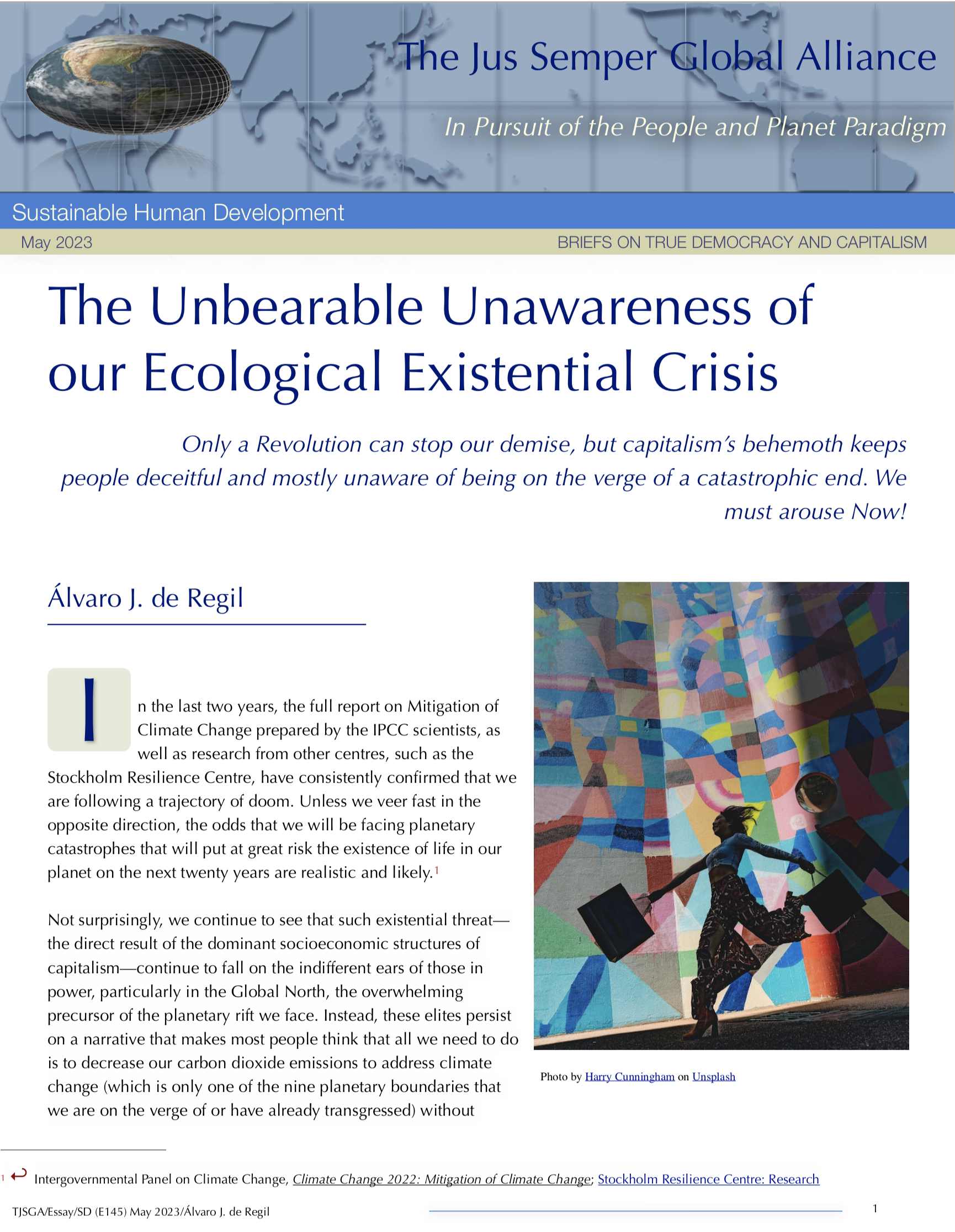
Transitioning to Geocratia — the People and Planet and Not the Market Paradigm — First StepsParting from the fact that saving Planet Earth, our home, changes everything, we need to build a new ethos where the majority of humankind commits to a system whose only purpose is the pursuit of the welfare of people and Planet Earth. This requires that all Earth resources necessary for the enjoyment of life of all living things be managed to achieve true long-term sustainability. — Álvaro J. de Regil 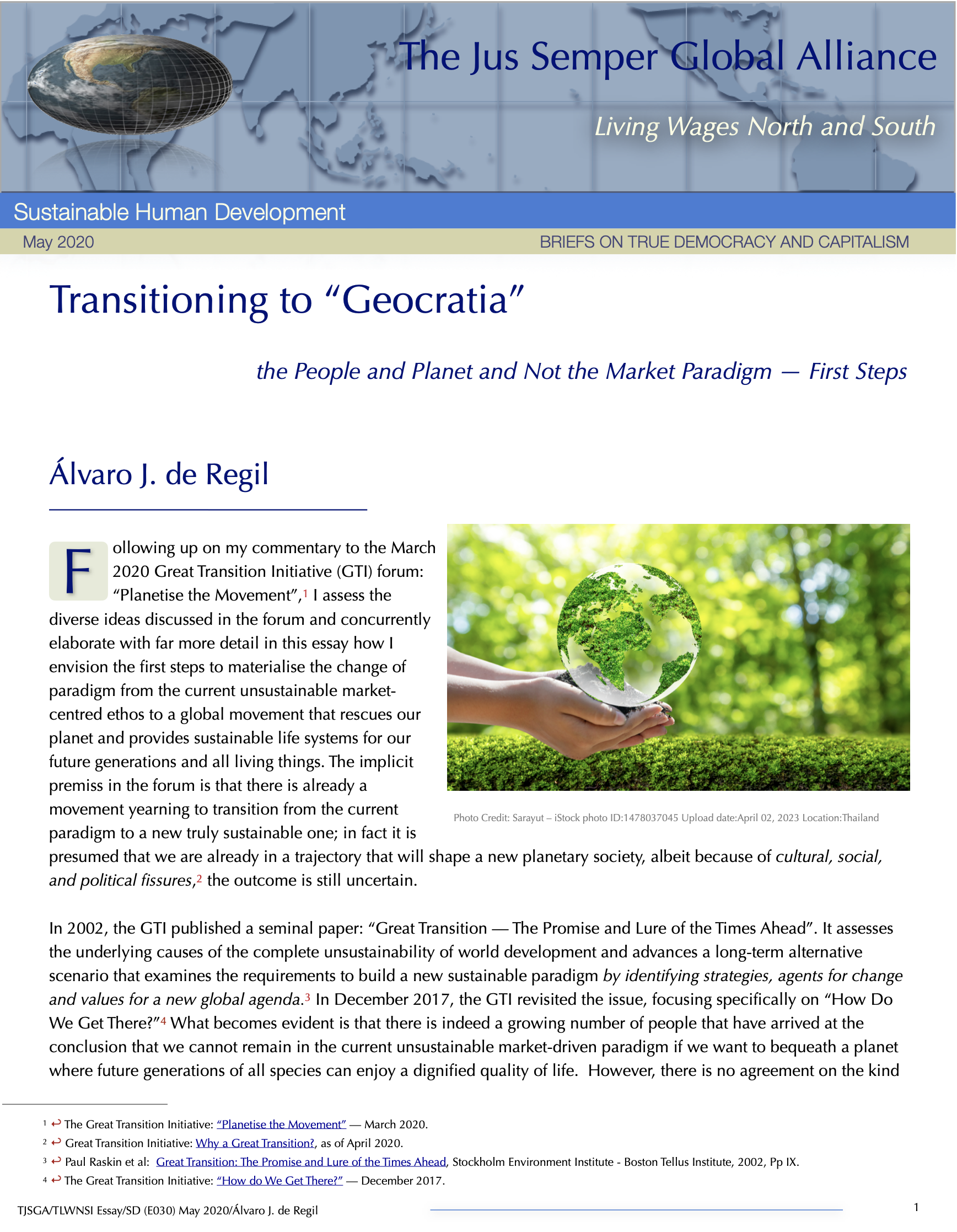
Capitalism and Extreme Poverty: A Global Analysis of Real Wages, Human Height, Mortality Since the Long 16th CenturyThis paper assesses claims that, prior to the 19th century, around 90% of the human population lived in extreme poverty (defined as the inability to access essential goods), and that global human welfare only began to improve with the rise of capitalism. The rise of capitalism caused a dramatic deterioration of human welfare. In all regions studied here, incorporation into the capitalist world-system was associated with a decline in wages to below subsistence, a deterioration in human stature, and an upturn in premature mortality. –– Dylan Sullivan and Jason Hickel 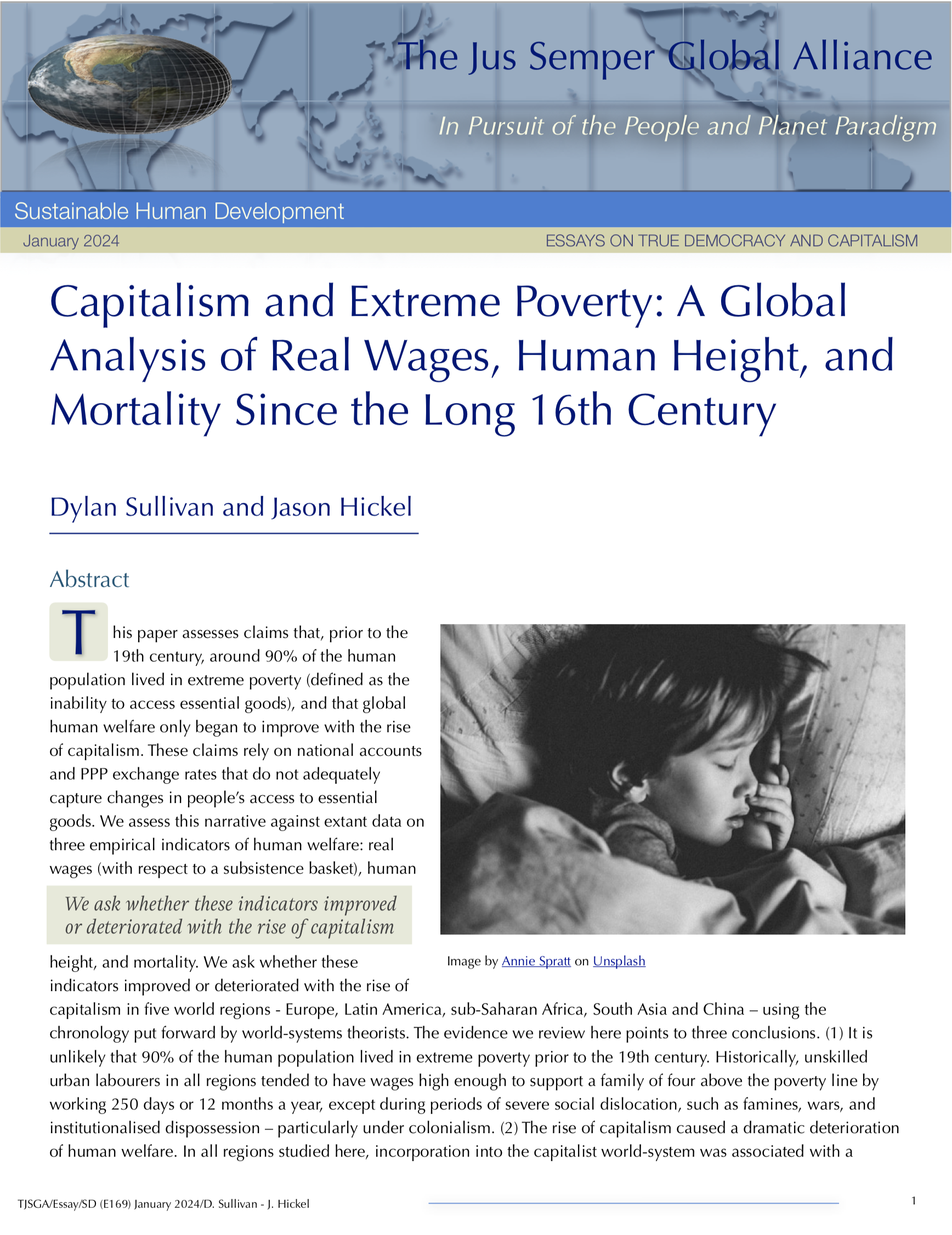
The irrelevance of animalsSo-called "laboratory meat" is simultaneously generating great expectations and concerns. The huge investment and research efforts of economically powerful private initiatives have uncovered an important economic niche waiting to be exploited. The promoters of the market for laboratory meat or meat derived from vegetable products have seen in their ethical and ecological foundations the great lever that will mobilise consumers on a massive scale towards their products. The growth in supply and speculation around these products responds, among other factors, to two very different pressures: on the one hand, the climatic behaviour of meat production. On the other hand, the growing pressure from animal and vegan groups on the living and dying conditions of the animals that are raised for their consumption. –– Pedro M. Herrera 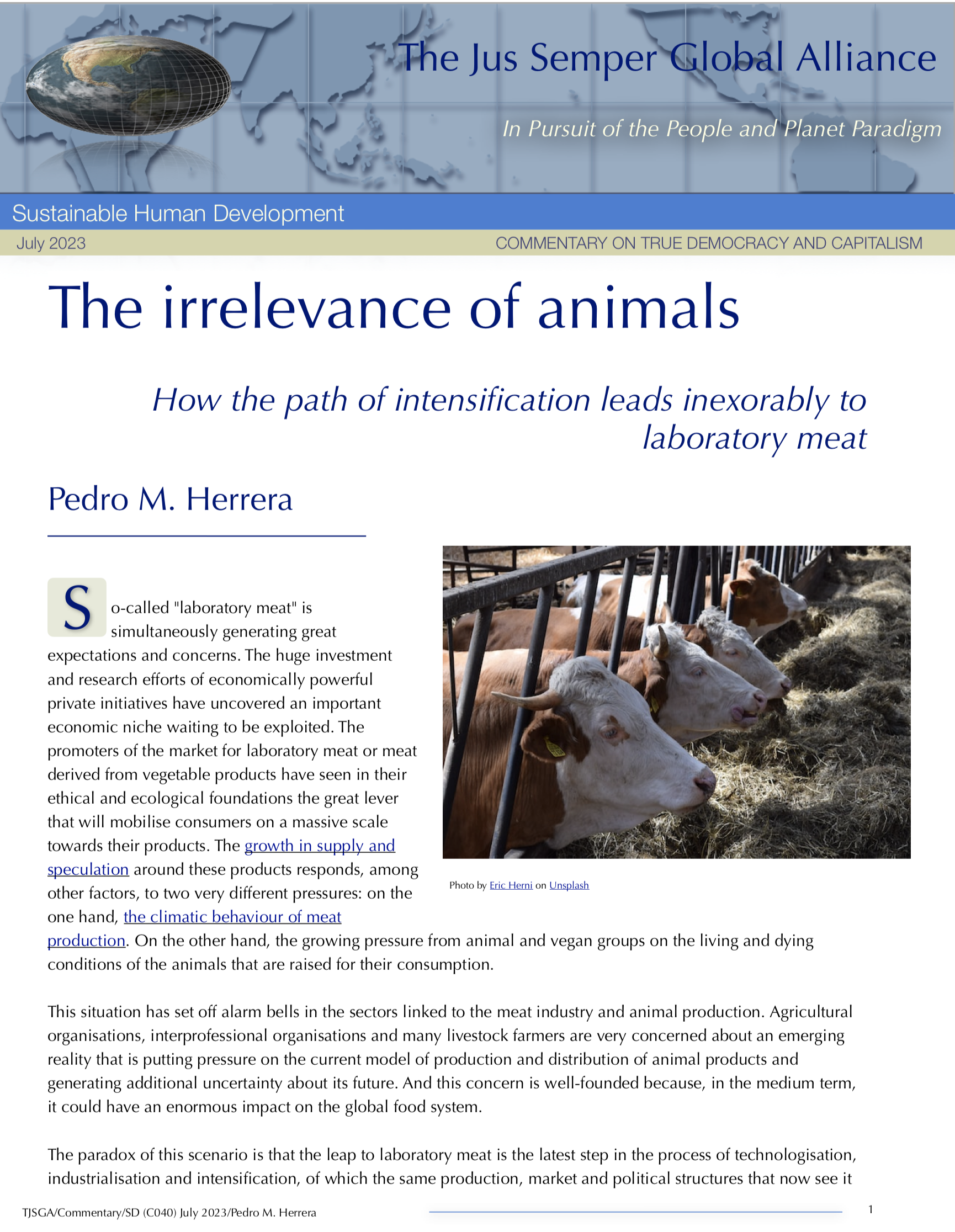
Controversial Demographic Projections Under Climate Collapse in 2050 - South and Mesoamerica in a Global ContextThe corporate sector is building another aggressive re-engineering of global agrifood systems in South America and Mesoamerica. The region represents a pillar for global food security, warns the UN in the New Mission. Capitalist euphoria assumes 10 billion inhabitants by 2050. This is forging higher agricultural productivity, innovation, digitalisation and the expansion of standardised agriculture. Thus, they produce and market food destined for populations with some or enough consumption capacity, overconsumption and waste of food with equivalent carbon footprints. –– Nubia Barrera Silva 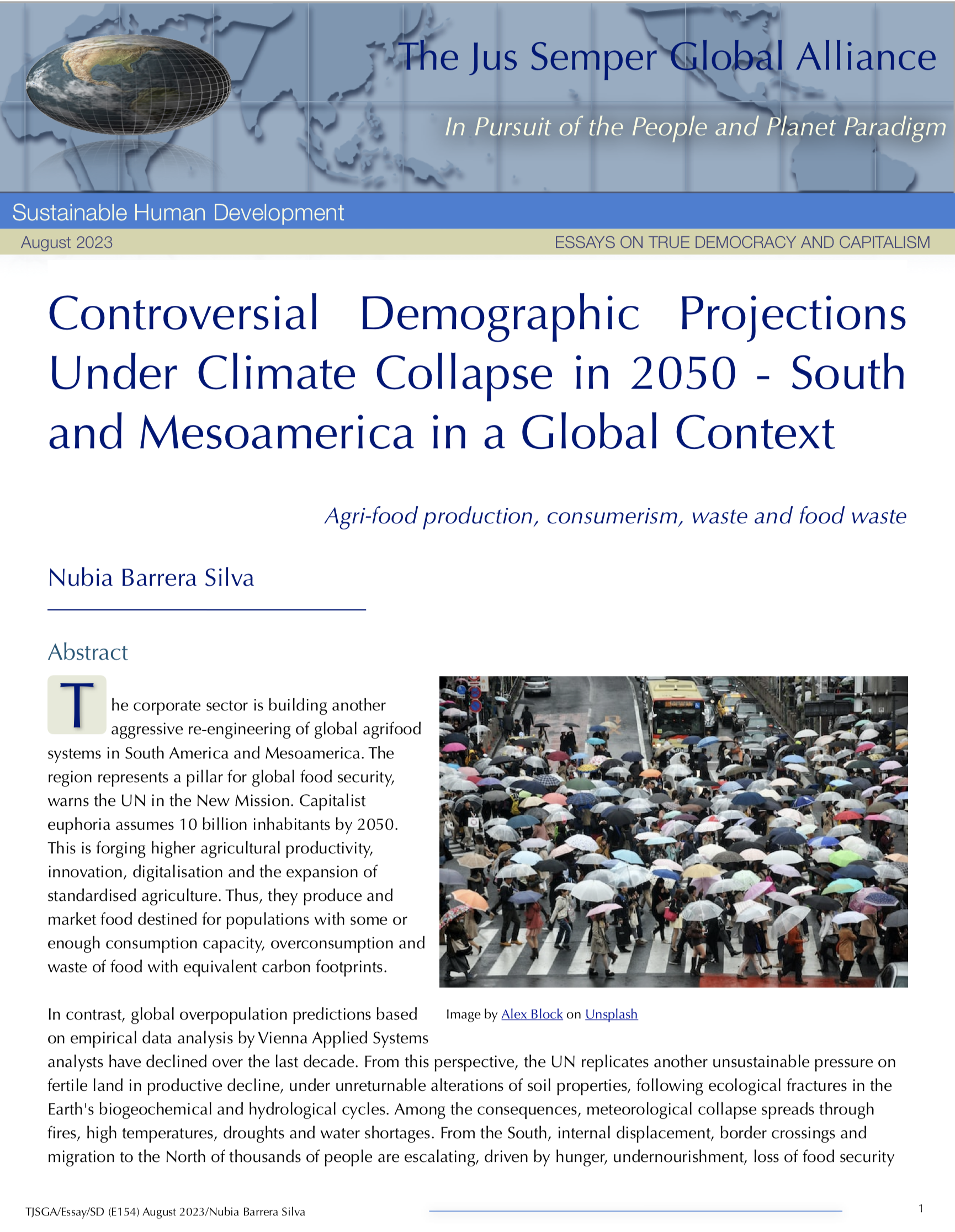
The pressing priority of saving the AmazoniaThe world's most biodiverse region is threatened by deforestation levels close to the point of no return. Despite this, the countries involved failed to reach agreements at the last summit in Brazil in August. –– David Roca Basadre 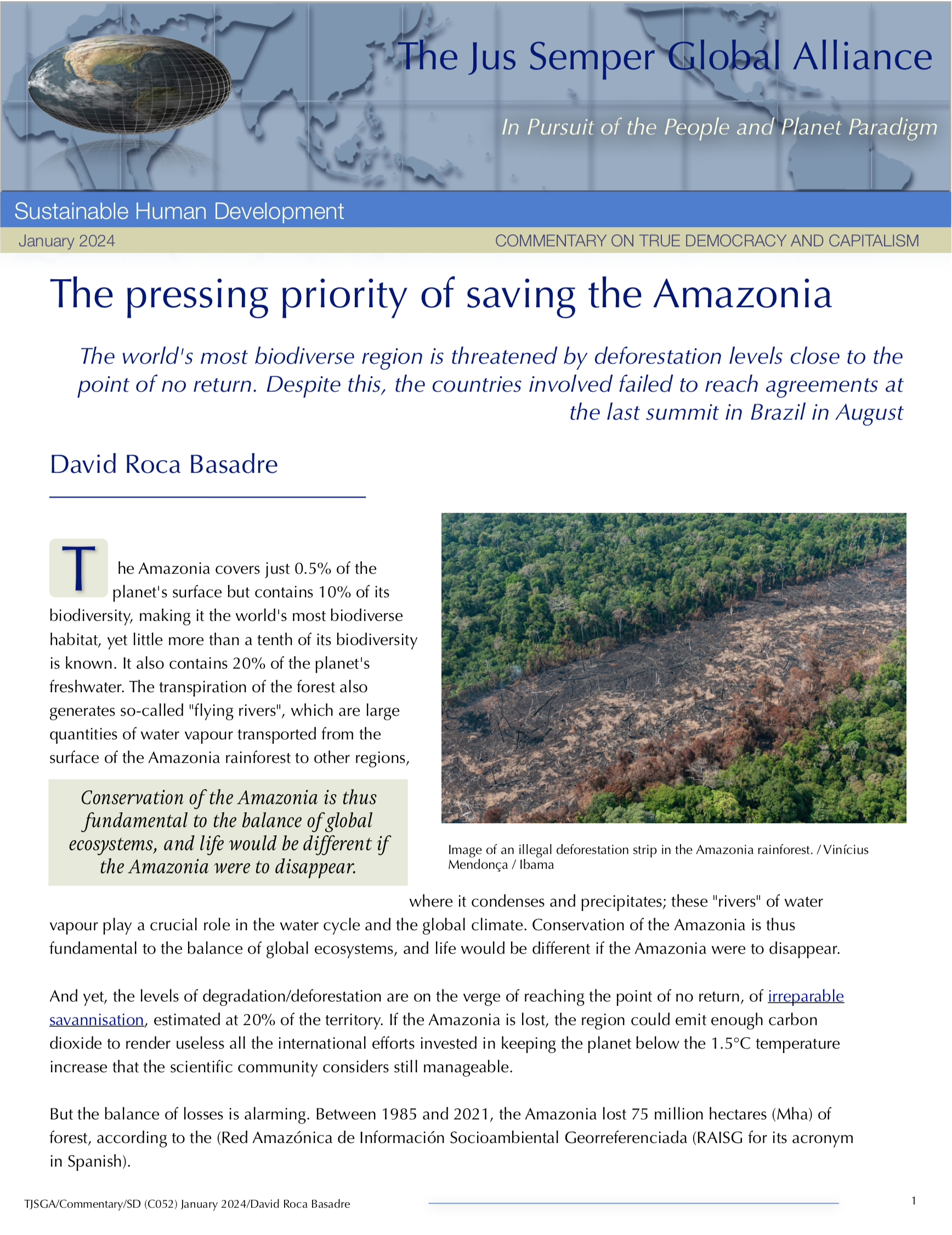
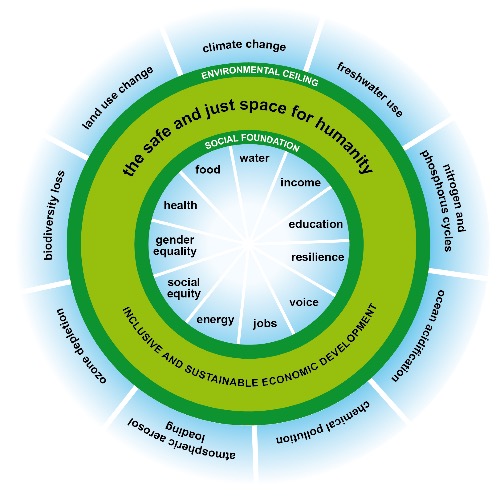
Safe and Just Earth System BoundariesHumanity is well into the Anthropocene, the proposed new geological epoch where human pressures have put the Earth system on a trajectory moving rapidly away from the stable Holocene state of the past 12,000 years, which is the only state of the Earth system we have evidence of being able to support the world as we know it. Seven of eight globally quantified safe and just Earth System Boundaries (ESB) and at least two regional safe and just ESBs in over half of global land area are already exceeded. We propose that our assessment provides a quantitative foundation for safeguarding the global commons for all people now and into the future. — Johan Rockström et al 
Marine plastic pollution as a planetary boundary threat – The drifting piece in the sustainability puzzleThe exponential increase in the use of plastic in modern society and the inadequate management of the resulting waste have led to its accumulation in the marine environment. There is increasing evidence of numerous mechanisms by which marine plastic pollution is causing effects across successive levels of biological organisation. This will unavoidably impact ecological communities and ecosystem functions. –– Patricia Villarrubia-Gómez, Sarah E. Cornell, Joan Fabres 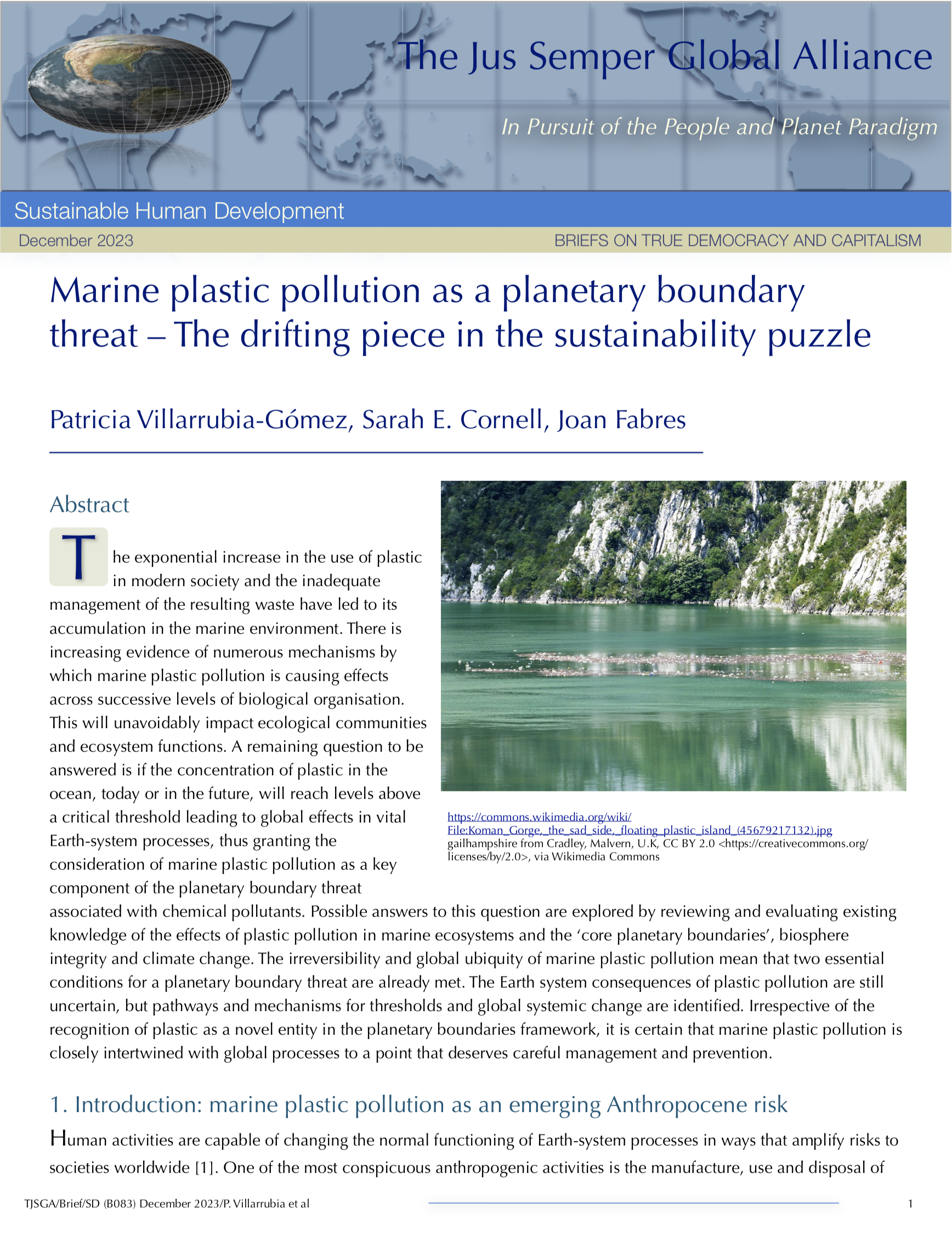
Crisis or collapse? Overshoot and degrowthThe delicate state of the Earth system has been described as a crisis or a set of crises: “ecological crisis,” “climate crisis,” “biodiversity crisis.” Our ecosocial situation has also been described as a crisis. The answer to the dilemma between crisis and collapse could ultimately lie in the combination of the incontrovertible diagnosis of serious ecological overshoot and the urgent need to decelerate—in order to hopefully prevent the consequences of overshoot from forcing a traumatic deceleration. — Asier Arias 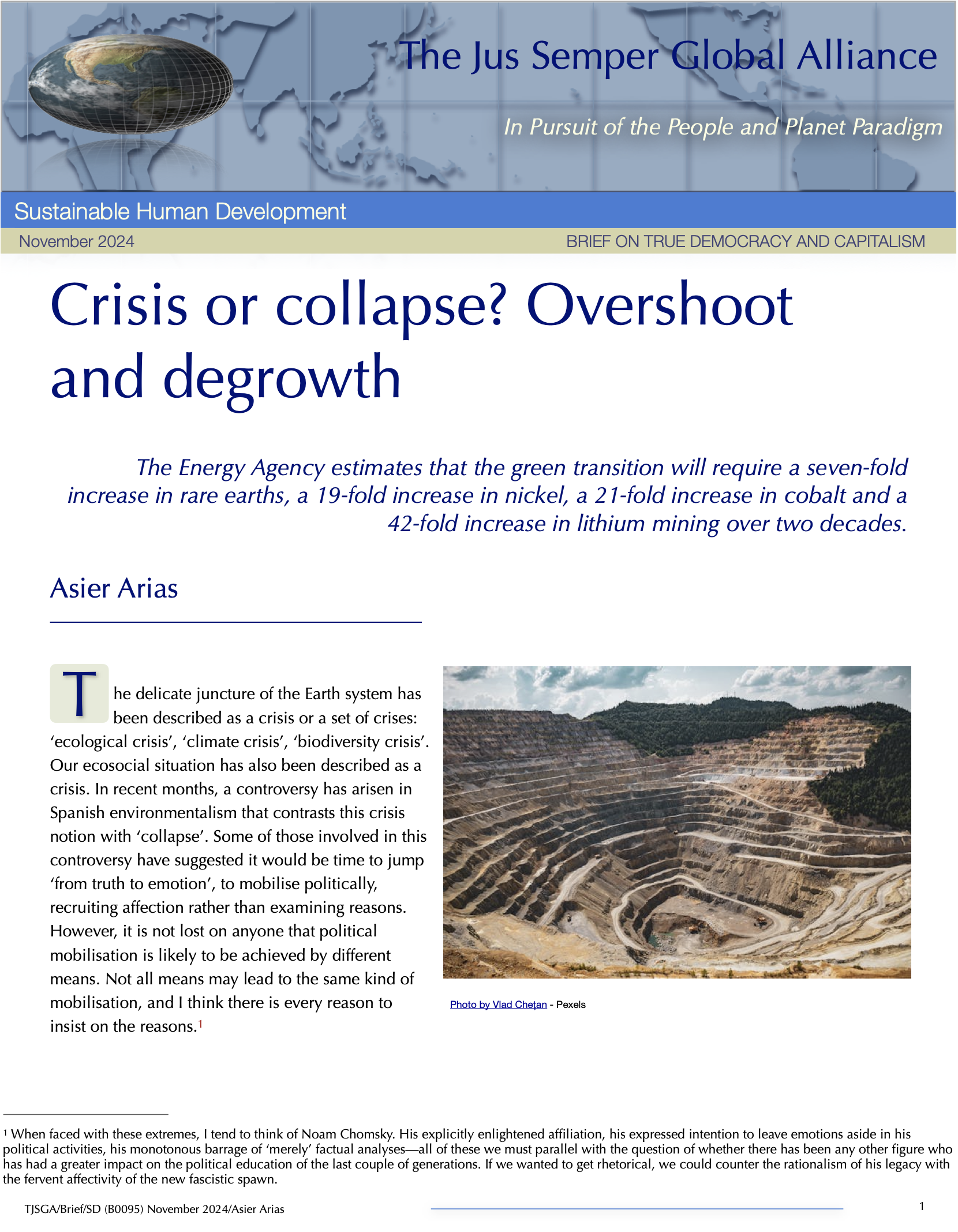
Earth beyond six of nine planetary boundariesThe update of the planetary boundaries framework reveals that six of the nine boundaries have been transgressed, suggesting that the Earth is now outside the safe operating space for humanity. Ocean acidification is about to be exceeded, while aerosol loading exceeds the limit regionally. Stratospheric ozone levels have recovered slightly. The transgression level has increased for all boundaries previously identified as exceeded. Given that primary production drives the biosphere functions of the Earth system, human appropriation of net primary production is proposed as a control variable for the functional integrity of the biosphere. This boundary has also been transgressed. Modeling the Earth system with different levels of transgression of climate change and Earth system boundaries illustrates that these anthropogenic impacts on the Earth system must be considered in a systemic context. —Katherine Richardson et al 
The Spectre of ‘Knowledge as Commons’Universalising knowledge, producing ‘knowledge as a common good’ is necessary to bridge gaps, build bridges and return power to the ‘people’ in a universal sense. –– Sam Popowich 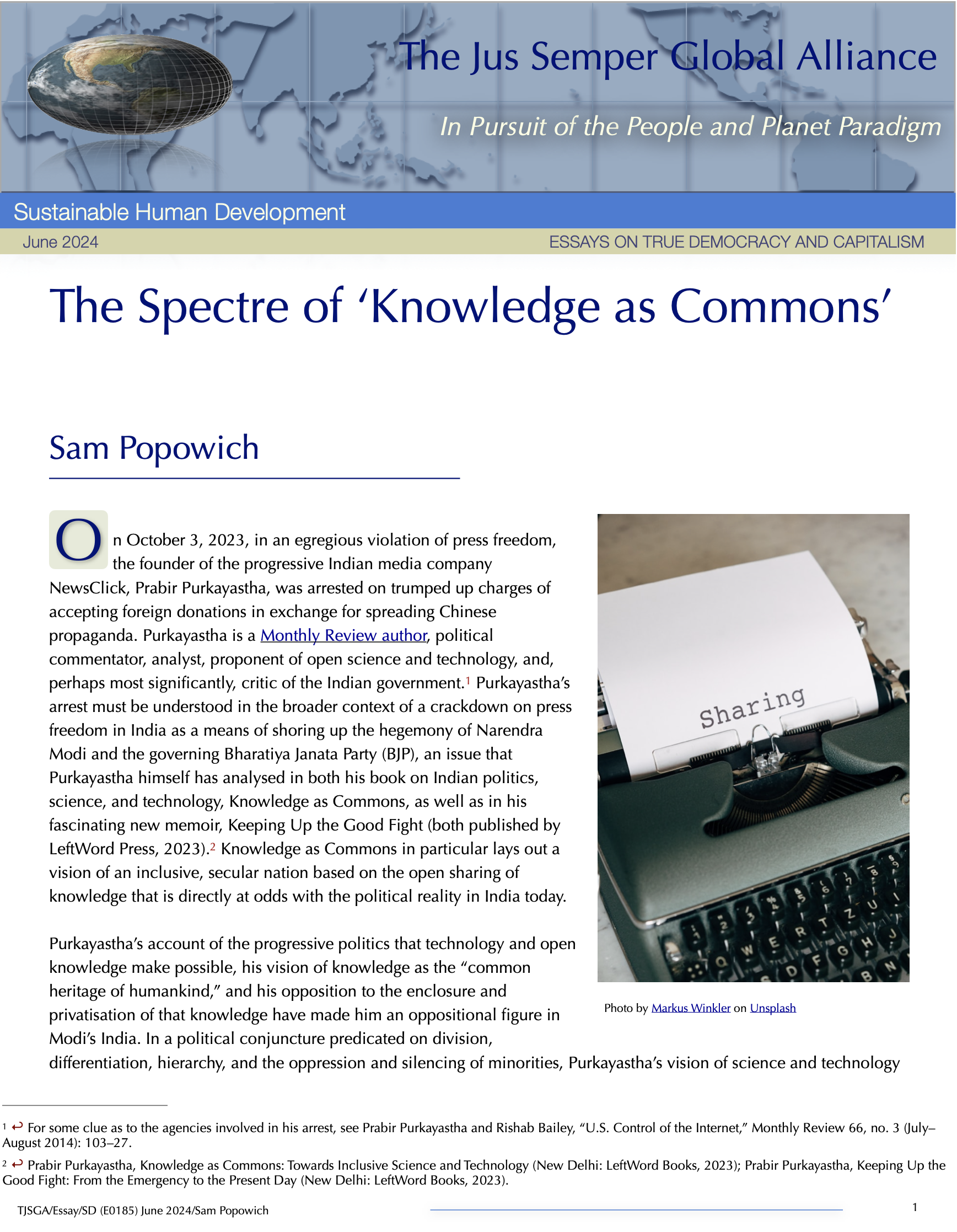
Making Sense of the World: Why Education Is Key to ChangeA precondition to creating a different world is the capacity to imagine it. But many education systems continue to bear the imprint of the industrial, nation-state societies they emerged from. What would be required to empower people to first envision and then build a more sustainable and just society? A conversation with economist Maja Göpel on how education could spark the shift. –– Maja Göpel 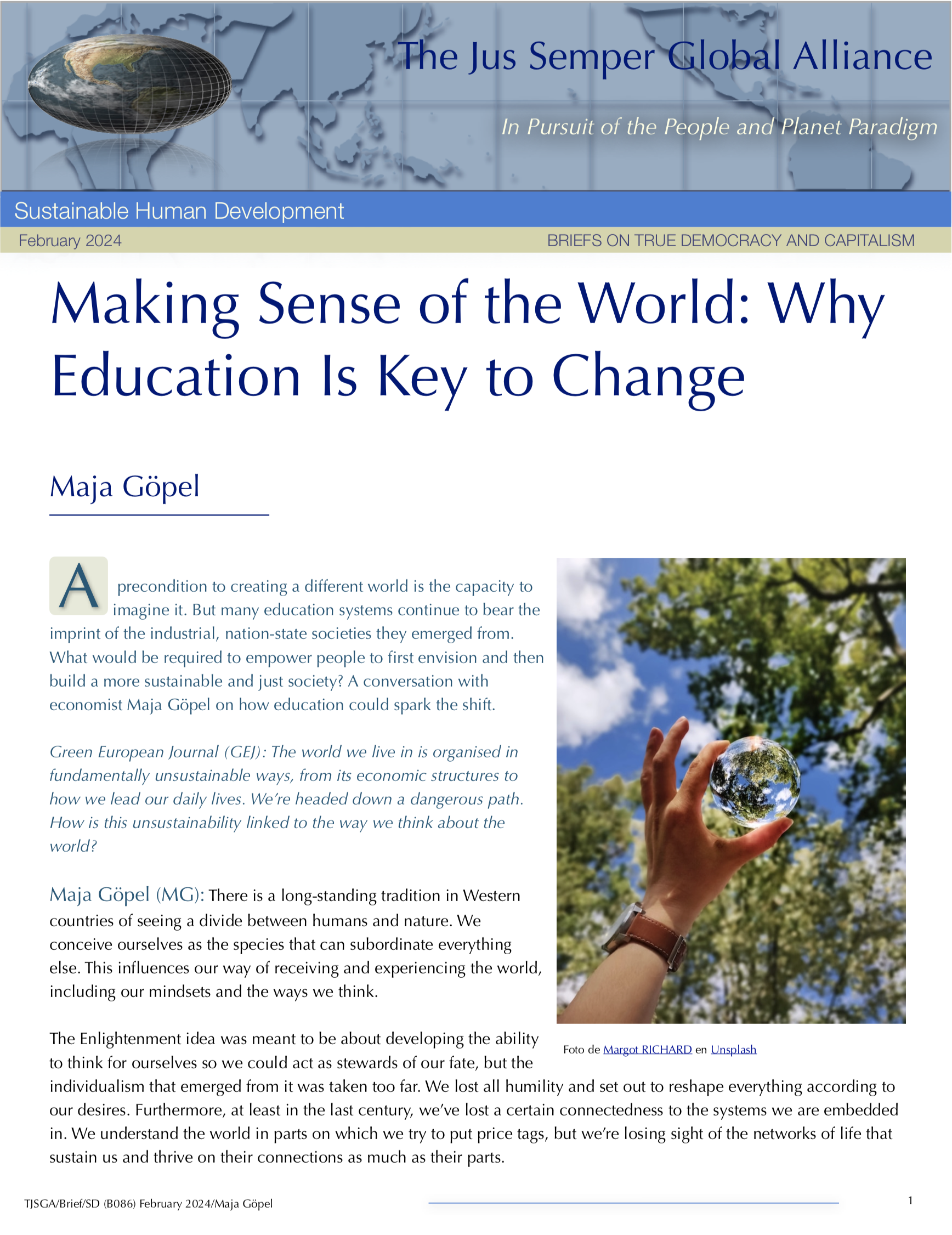
Just population policies for an overpopulated worlAfter decades of neglect, environmentalists are once again becoming aware of the need to limit the number of human beings. But, like Rip Van Winkle, we find that the world has changed while we were asleep. There are now billions more people, hundreds of millions of new members of the global middle class, and high consumption among the rich. Meanwhile, the planet has become warmer, more polluted, more domesticated, and more impoverished. This article specifies what just population policies look like for an overpopulated world: one where most national populations must decrease significantly to create sustainable societies, and where failure to do so threatens environmental disaster for humans and the rest of life on Earth. — Philip Cafaro 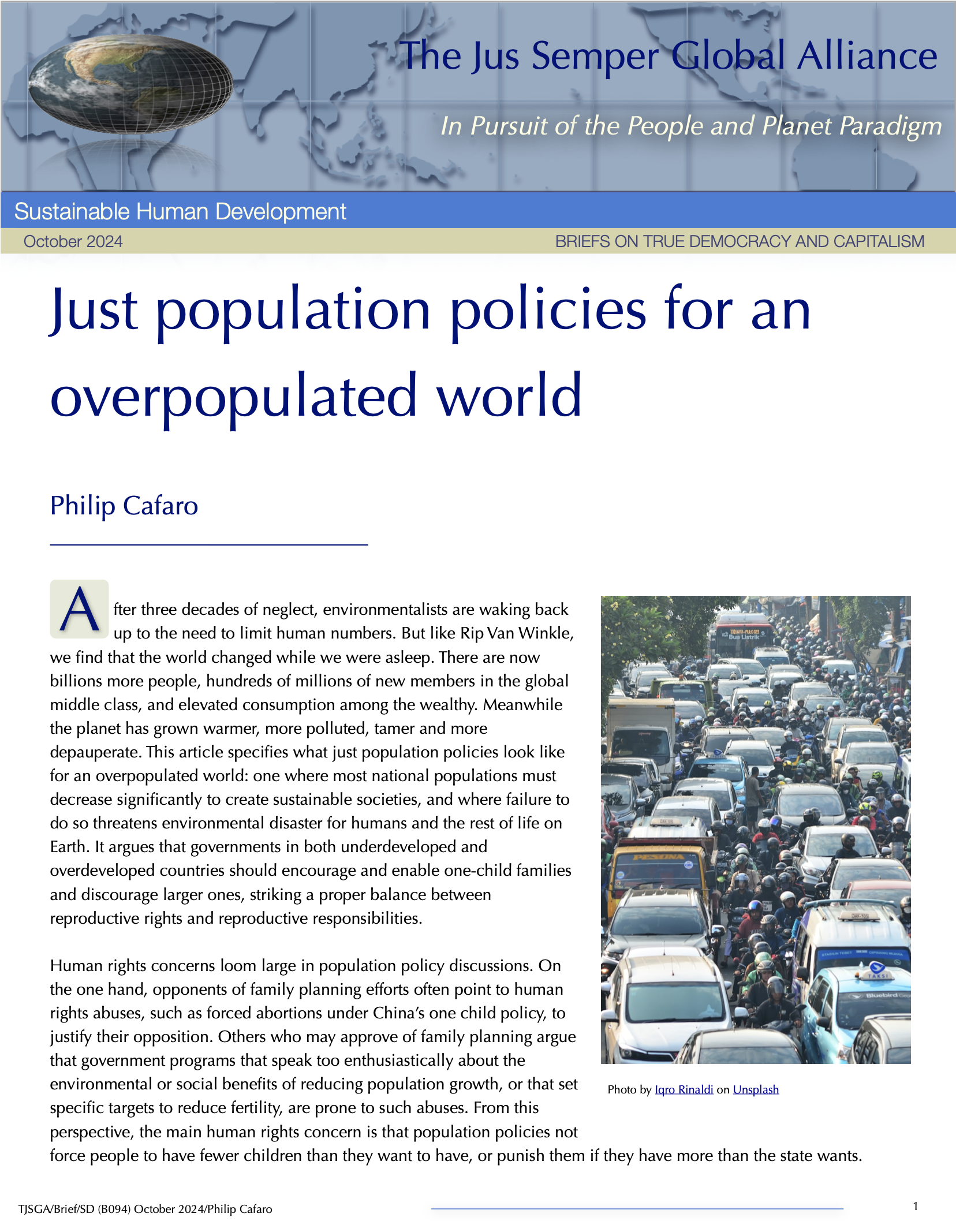
Advancing the Welfare of People and the Planet with a Common Agenda for Reproductive Justice, Population, and the EnvironmentDriven by rising consumption and population, human demands are depleting natural resources essential to human life, damaging farmland, freshwater supplies, fisheries, and forests, and driving climate change. This report offers a strategy to protect natural systems and improve well-being by expanding reproductive justice, a concept that includes family planning, reproductive health, and gender equity, and the preservation of the environment and climate. —J. Joseph Speidel and Jane N. O'Sullivan 
Demographic Delusions: World Population Growth Is Exceeding Most Projections and Jeopardising Scenarios for Sustainable FuturesThe size of the world population has profound implications for the demand for food, energy, and resources, changes in land use, and greenhouse gas emissions. This study examines why most population projections have underestimated global population growth and the implications for the actions needed to achieve sustainable societies. —Jane N. O'Sullivan 
‘The energy transition has not yet begun’Interview with Jean-Baptiste Fressoz (France, 1977), historian of science, technology, and the environment, and professor at the School for Advanced Studies in the Social Sciences in Paris. He has just published Without Transition: A New History of Energy (Seuil), which will be translated and published in Spanish by Arpa. He is also the co-author, with Christophe Bonneuil, of The Anthropocene Event: The Earth, History, and Us (Points Histoire) and The Joyful Apocalypse: A History of Technological Risk (Seuil). —Hervé Kempf 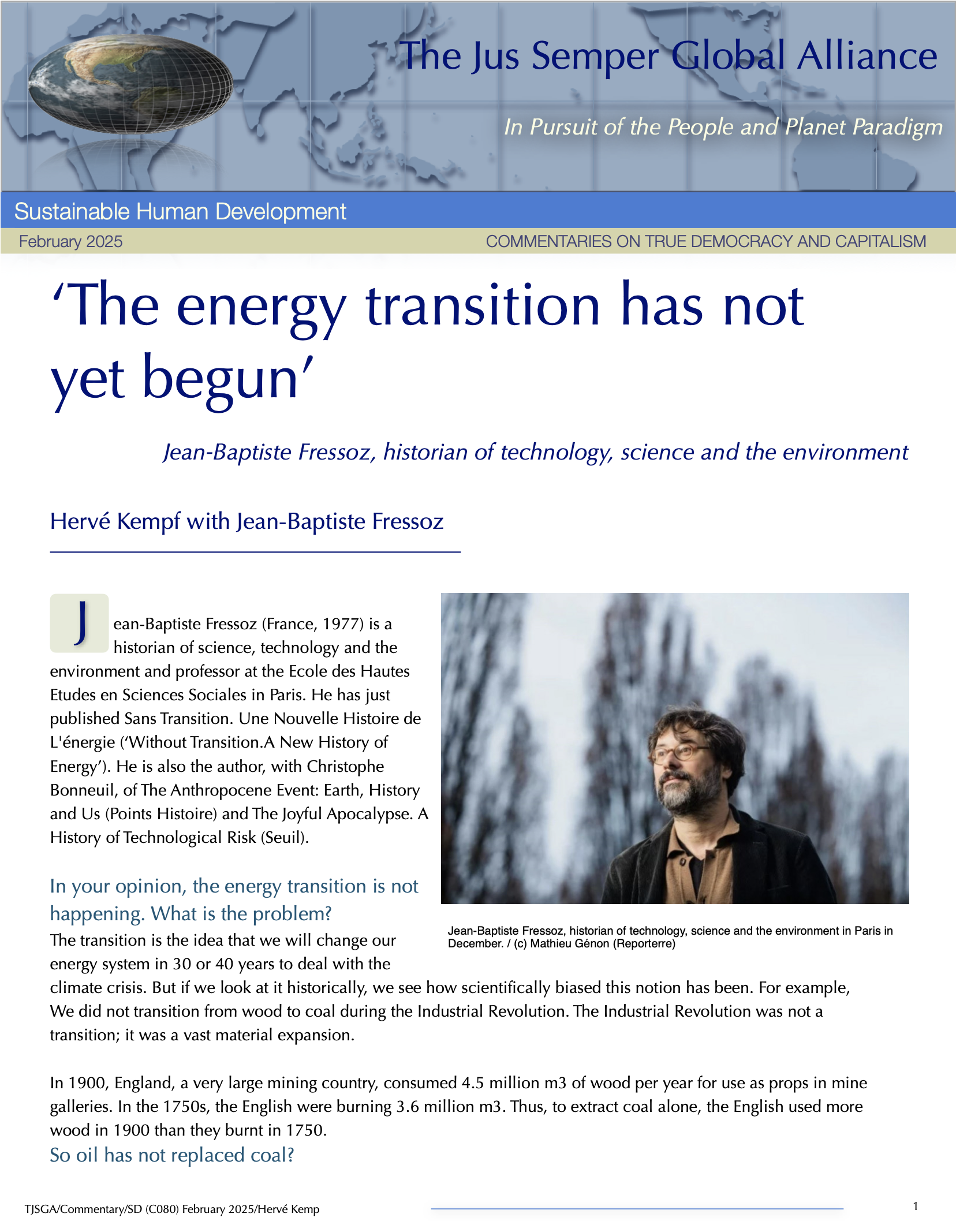
World scientists’ warning: The behavioural crisis driving ecological overshootAnthropogenic ecological overshoot has previously been identified as a root cause of the myriad symptoms we observe today across the planet, from biodiversity loss and ocean acidification to the disturbing rise of new entities and climate change. We aim to highlight the critical disconnect of the current social chasm in communication between those in the know, such as scientists working within the limits of growth, and members of the citizenry, influenced largely by social scientists and industry, who must act. –– Joseph J. Merz et al. 
Imperialism in the Indo-Pacific — An IntroductionAs respected international relations specialist David C. Kang has argued in American Grand Strategy and East Asian Security in the Twenty-First Century (2017) and other works, there has been a general decline in military spending as a percentage of GDP in the largest East Asian states over the past two decades. Taking the eleven largest states, it has fallen to approximately half of what it was two and a half decades ago, declining from an average of 3.35% in 1990 to an average of 1.8% in 2015, a trend that has continued. This objectively points to a growing, rather than declining, sense of national security in the region. It is this climate of peace that the United States threatens to disrupt, not for the sake of East Asia, but with the aim of preserving its preeminence as a world power at all costs. —John Bellamy Foster and Brett Clark 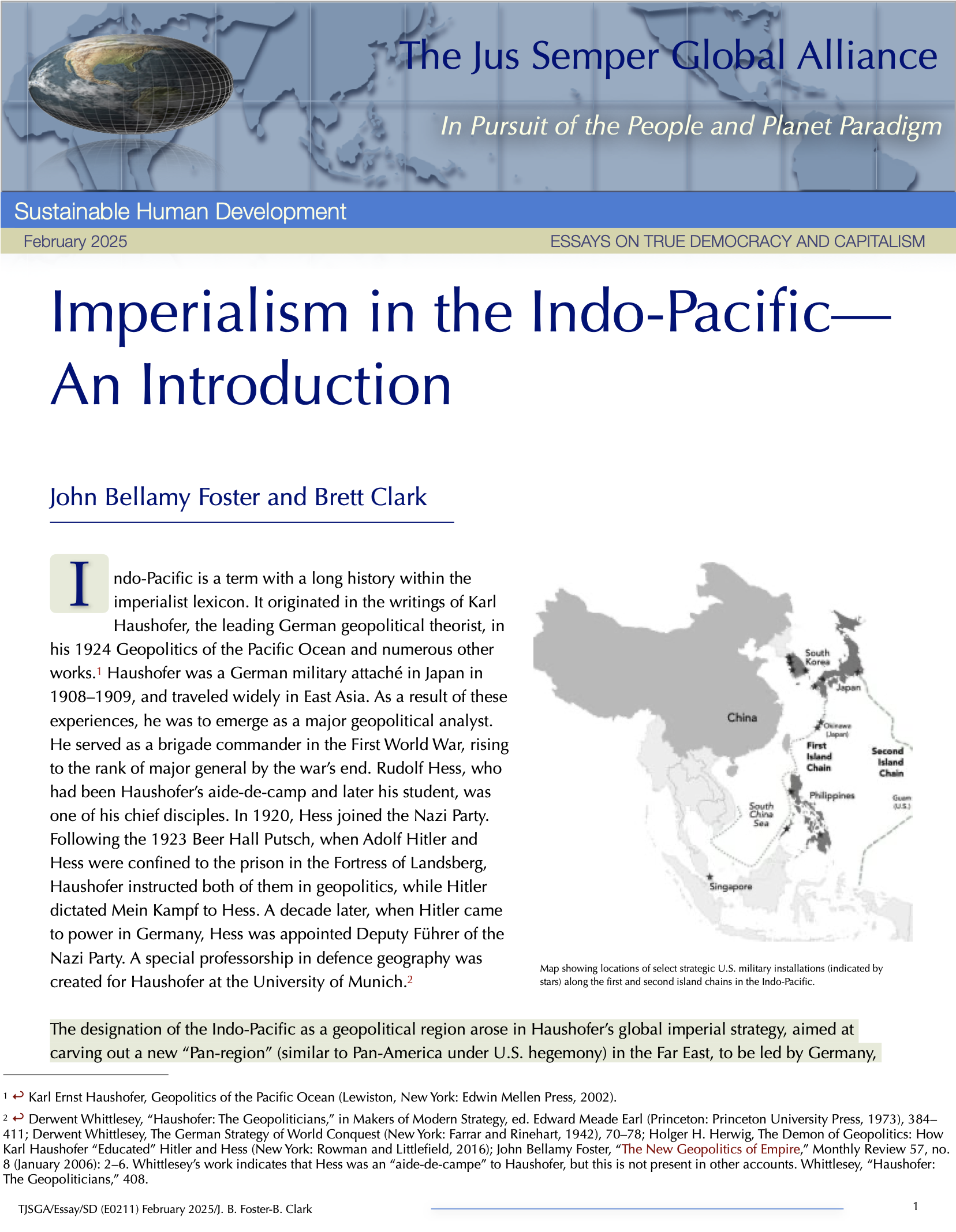
Einstein’s “Why Socialism?” and ‘Monthly Review’: A Historical IntroductionAlbert Einstein, the world's most famous theoretical physicist and its most celebrated scientist, had fled Germany after the rise of Adolf Hitler, emigrating to the United States in 1933, where he became a citizen in 1940. However, for J. Edgar Hoover's FBI, Einstein remained a dangerous and anti-American figure who threatened the internal security of the United States by his very presence in the country. His 1949 publication of an article entitled ‘Why Socialism?’ for the new magazine Monthly Review: An Independent Socialist Magazine was thus seen by the FBI as direct confirmation of his strong ‘Communist sympathies.’ —John Bellamy Foster 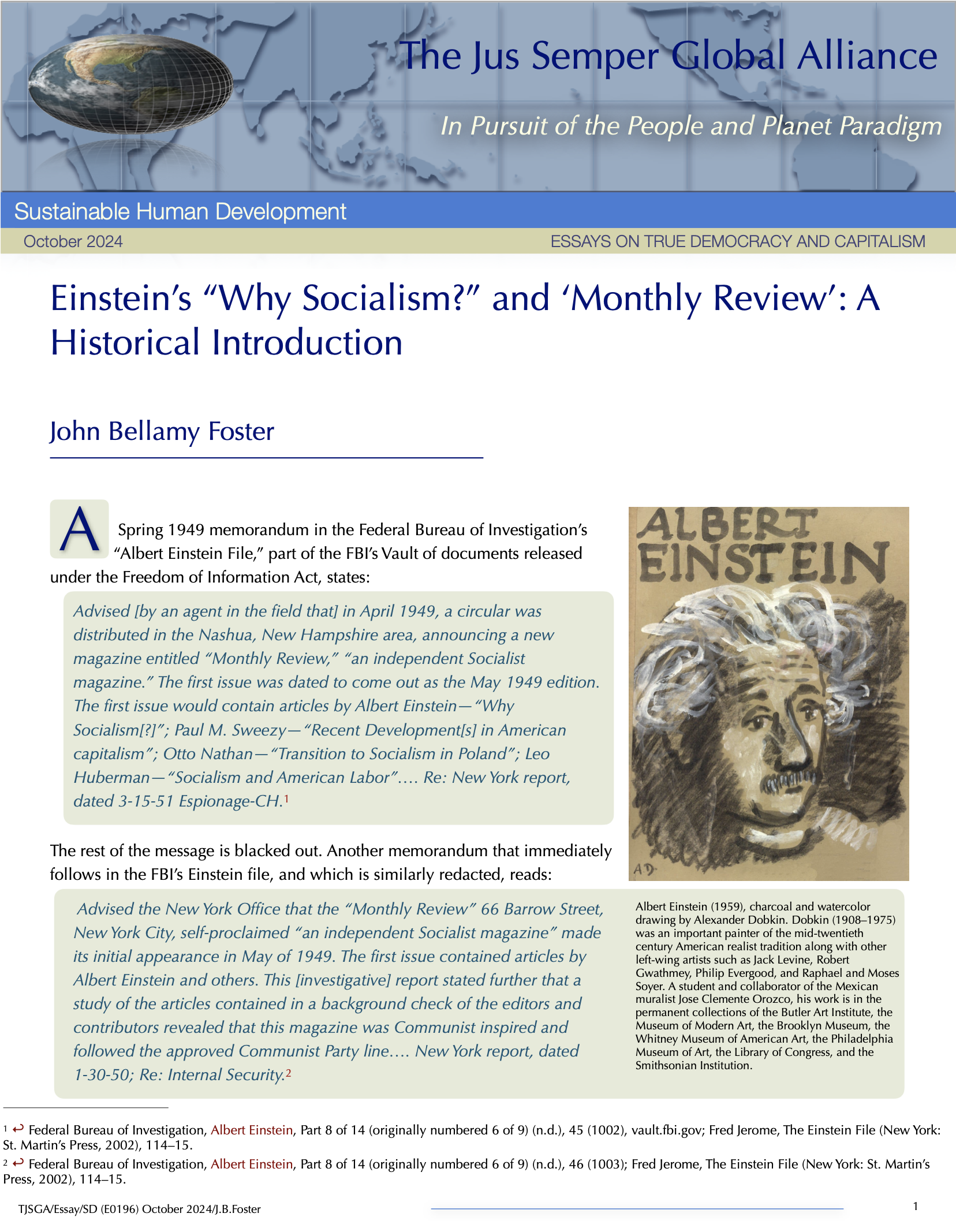
The Case for Socialist VeganismCorporate veganism: a corporate greenwashed market expansion tactic that exacerbates animal suffering, human exploitation and ecological destruction inside and outside the food system. –– Benjamin Selwyn and Charis Davis 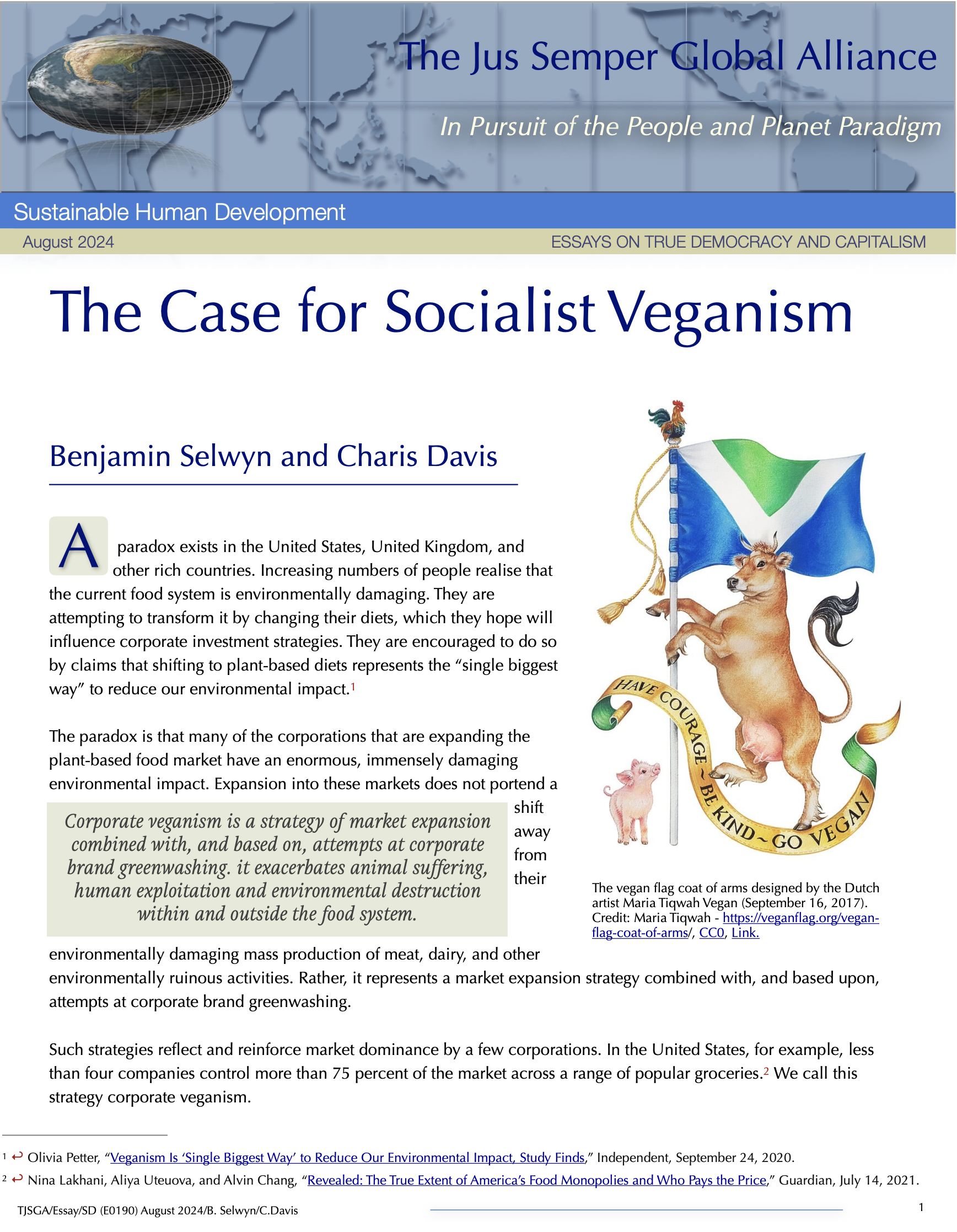
Overconfidence in climate overshootGlobal emission reduction efforts remain insufficient to achieve the Paris Agreement temperature goal. This makes the systematic exploration of so-called overshoot pathways, which temporarily exceed the global warming limit set before reducing temperatures to safer levels, a priority for science and policy. Only a rapid reduction in emissions in the short term is effective in reducing climate risks. — Carl-Friedrich Schleussner et al 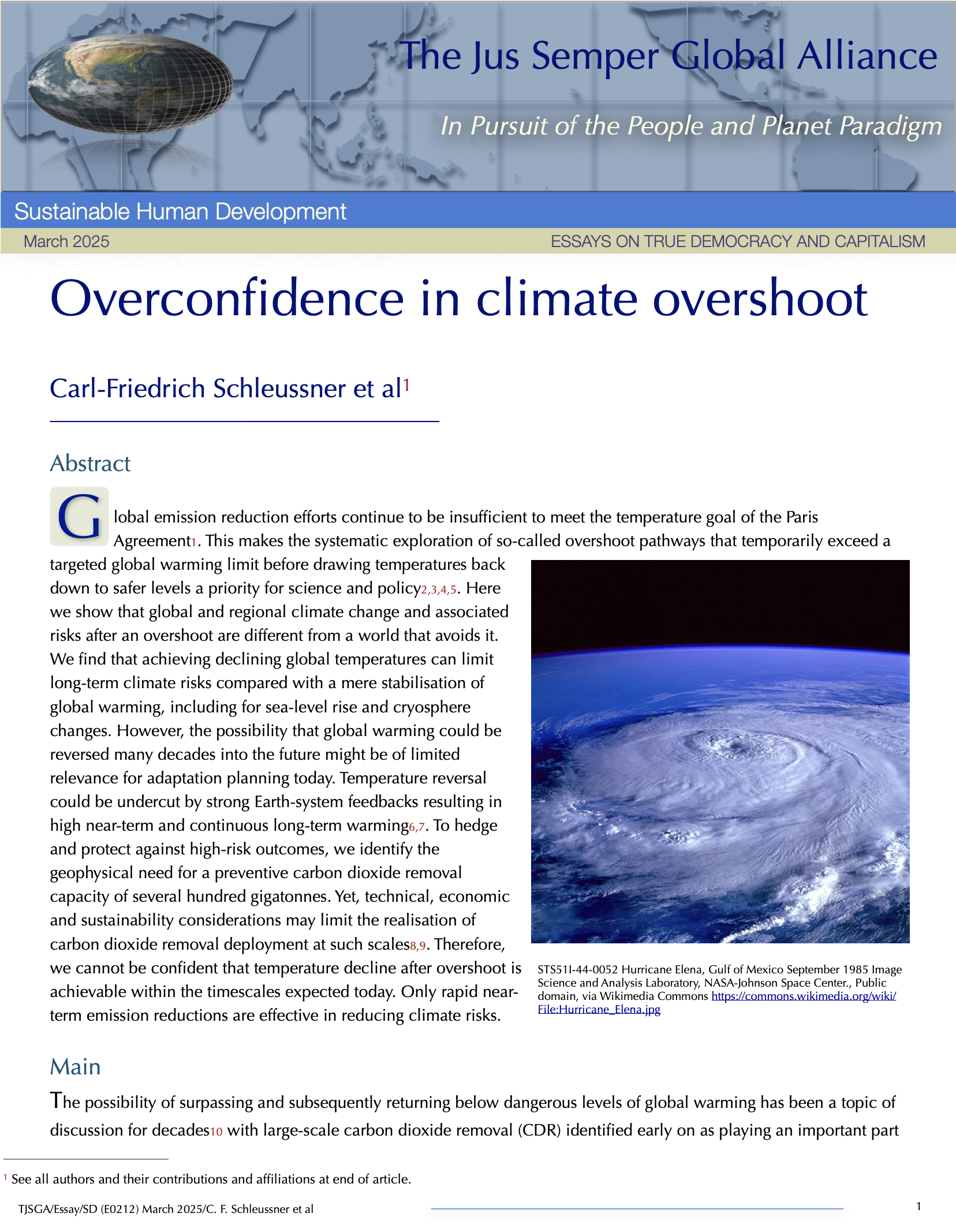
Provoking Awareness and Action for GeocratiaContrary to the dominant narrative, we do not live in democratic societies, but in totally unsustainable market-driven societies aimed at maximizing capital accumulation. This requires infinite production and consumption on a finite planet, causing a planetary fracture that is leading us down an unsustainable path where life is likely to be at monumental risk in the next twenty years, unless we quickly divert from it. To do this, we need to replace capitalism with Geocracy or the “government of the Earth,” where we reorganize ourselves socially to build a new ecocentric edifice centered on caring for our planet. To achieve this, we must build a revolutionary movement from the ground up to strike a blow against the system and force governments to agree to new geocratic ecosocial contracts. Here I describe how to achieve this. —Álvaro J. de Regil 
‘The sea can be a subject of law'The Mar Menor was the first natural environment in Europe to be granted legal personality. This milestone has attracted the attention of half the world, interested in new ways of preserving their home. It is too early to tell, but it would not be unreasonable to think that this civil and human achievement is incubating unprecedented repercussions on the way we have conceived our relationship with nature until now. Starting with the radical conviction that it is not just a formula for necessary respect for the planet, but ‘a path to peace’. One more step on the long road of respect that we still owe ourselves as inhabitants and children of the Earth. —Miguel Ángel Ortega Lucas 
The New Cold War on ChinaThe Trump administration's pursuit of a new Cold War against China is not an anomaly, but rather the inevitable response of the US to China's rise and the end of Washington's unipolar moment. Just as the United States declared a Cold War against the Soviet Union and China in the 1940s and 1950s as part of a grand strategy to secure its global hegemony in the immediate post-World War II era, today it is declaring a New Cold War against China in order to maintain that same imperial hegemony. —John Bellamy Foster 
The Ecological Rift in the Anthropocene—A conversation with John Bellamy Foster on ecology, ecological imperialism, and potential solutions to the ongoing planetary crisis. —John Bellamy Foster, Fabio Querido, Maria Orlanda Pinassi, and Michael Löwy 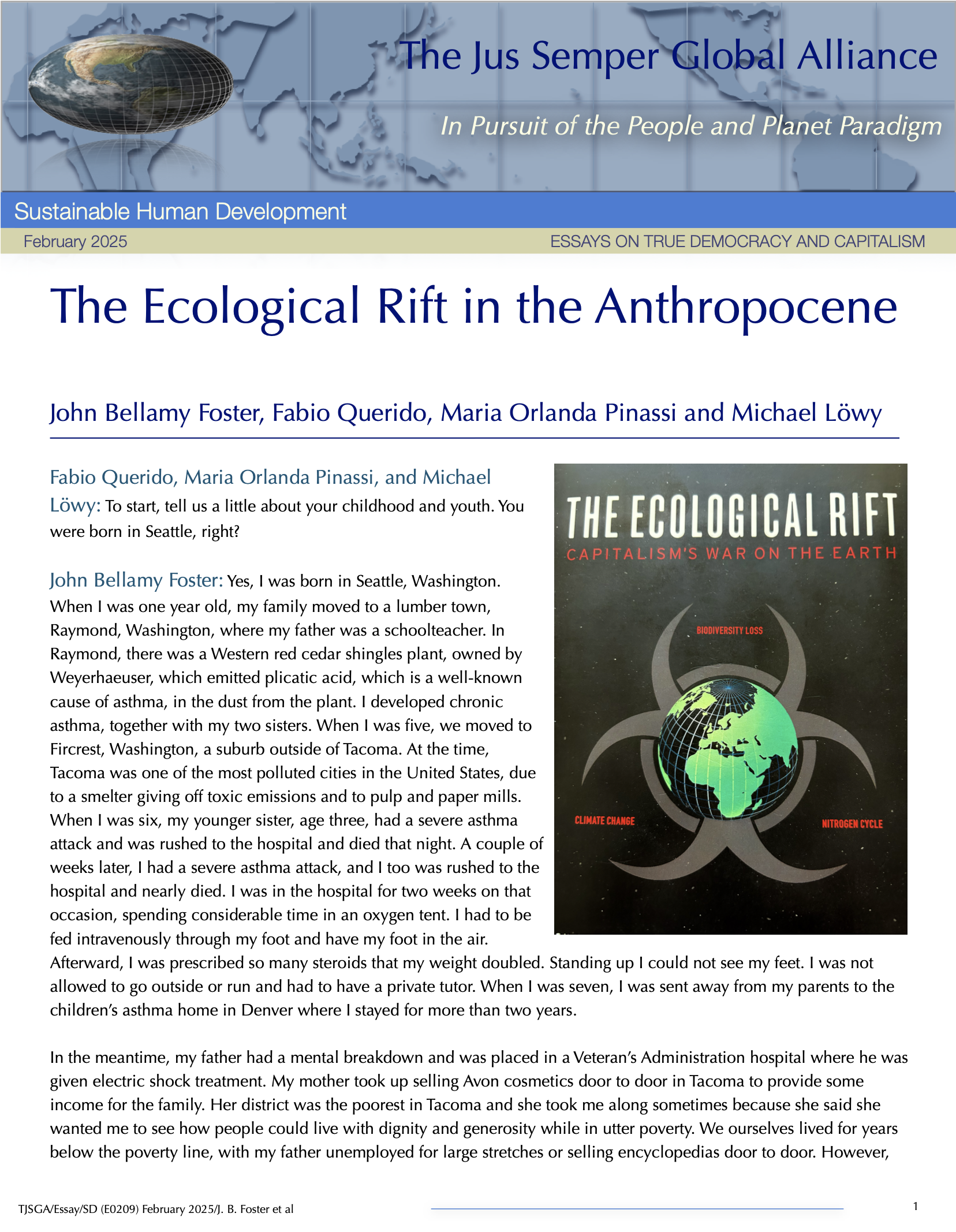
Taiwan: An Anti-Imperialist PerspectiveIn the Western imagination, Taiwan is little more than a stage for ideological warfare with the People's Republic of China (PRC), a crossroads between democracy and authoritarianism, Western values and Chinese backwardness, and free-market capitalism and closed-door communism. However, the island of Taiwan has played a fundamental role in Chinese history for centuries. Located just 100 miles off the south-east coast of the mainland, Taiwan was linked to it through migration, trade, language and culture long before European and Japanese colonisers took advantage of its strategic location as a launching pad for economic and military incursions against China as a whole. Today, this history continues as US imperialism positions Taiwan as the ideological and military base for its new Cold War against China. —Qiao Collective 
The U.S. Quest for Nuclear Primacy: The Counterforce Doctrine and the Ideology of Moral AsymmetryWhen I come to study in detail some of the arguments of these new military writers about nuclear war, I will necessarily have to adopt many aspects of their own methods and terminology, that is, I will have to meet them on the methodological ground of their own choosing. I want therefore to apologise in advance for the nauseating inhumanity of much of what I have to say. (P. M. S. Blackett) — John Bellamy Foster 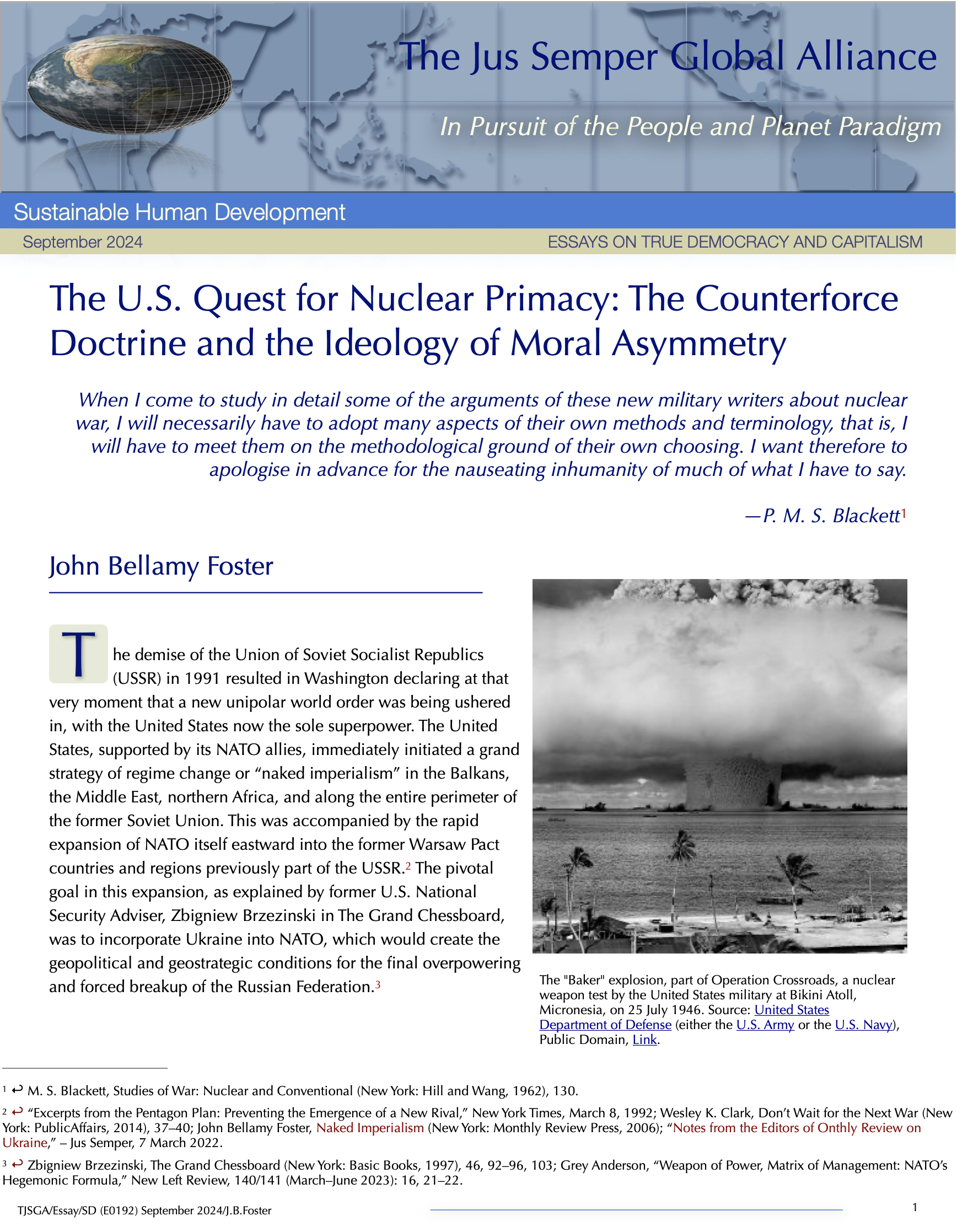
Planetary justice: a systematic analysis of an emerging discourseConcern for justice has been central to contemporary social and ecological debates for decades, but only recently has it been introduced into Earth system-focused discourses on the Anthropocene and planetary boundaries. In this article, we will focus on the emerging discourse on planetary justice, which aims to address this gap. Our goal is to outline the general parameters and novel contributions of planetary justice, while acknowledging the emerging variability within this discourse. —Agni Kalfagianni, Stefan Pedersen, and Dimitris Stevi 
Narrating the AmazonAs the largest tropical forest and one of the biggest carbon sinks in the world, the Amazon plays an indispensable role in keeping our planet habitable. Although the threat facing the Amazon region is well-known, it is hard to truly grasp the severity of the situation through scientific facts alone. Inter-cultural exchanges and discarding longstanding colonial perspectives can help bridge that gap. — Paolo Pecere 
Earth system boundaries and Earth system justice: sharing the ecospaceThe literature on planetary and Earth System boundaries urges humans to live within those boundaries. Sharing such a limited ecospace raises questions of justice. Global environmental assessments and scholars of the topic are increasingly paying attention to questions of justice, but they do not adequately define how to share the limited ecospace. In this context, we ask how the justice awareness of global environmental assessments can be improved through an Earth System justice framework that guides how the global community might share limited ecological space. Based on an analysis of how justice concerns are addressed, we propose an Earth System justice framework that analyzes how ecospace can be shared fairly. —Joyeeta Gupta et al 
The evolution of the climate movement: from radicalism to complacencyIn 2018, the publication of the Special Report on Global Warming of 1.5°C marked a turning point in the climate movement. This report urged the international community to take radical action. This call to action sparked an unprecedented wave of mobilisation, giving rise to a new generation of movements that not only placed the climate crisis at the centre of institutional and social debate, but also linked it to other struggles such as the labour, decolonial, feminist and anti-speciesist movements. However, over time, the initial fervour of these movements seems to have waned. What began as a radical challenge to hegemonic powers has been transformed into a series of initiatives more oriented towards self-indulgence and group therapy.— Bilbo Basaterra 
Innovate or DieTechnological development is often seen as a natural product of human ingenuity that should never be stopped or directed. But innovation can also exacerbate social and environmental impacts. Can degrowth reorient technology towards an inclusive and environmentally friendly transformation? The idea that innovation is key to economic growth is deeply rooted in our society. But this exclusively positive framing of technology ignores that innovation, in addition to improving quality of life, can reinforce existing structures of power and oppression and exacerbate environmental damage. New narratives are needed to broaden the scope of the concept of innovation.—Mario Pansera 
The Dream of a Thing: Refounding the Economy of a Venezuelan CommuneProbably the most famous quote from José Carlos Mariátegui, often considered the founder of Latin American Marxism, is that socialism on our continent must be ‘neither a copy nor an imitation, but a heroic creation.’ Chávez gave equal importance to the latter part, which focused on the construction of new social relations as a popular and constitutive act. He was not wrong. What would socialism be if not an innovative creation of the people? Beyond the refusal to copy and imitate, Chávez saw that what was needed was a difficult but necessary collective effort by the masses that would involve their participation in iterative experimentation—research, participation, and action—in the construction of socialism. —Chris Gilbert 
Navigating desires beyond growthAs a critical environmental political project, the degrowth movement opposes the hegemony of economic growth. In this article, we explore the role that fantasy plays in the emergence and sustenance of the movement. Drawing on semi-structured interviews and official documents, we examine the discourse of degrowth from the perspective of Critical Fantasy Studies, arguing that fantasies structure the desires of supporters and sustain the energy that underlies their environmental policies and actions. We suggest that the fantasy of ‘mutual dependence and care’, in particular, affectively strengthens their efforts to challenge hegemonic norms of economic growth and, in doing so, reinforces the distributed modes of political action of degrowth, while allowing its members to cultivate a prefigurative ethic of commitment. —Joshua Hurtado Hurtado and Jason Glynos 
| ||
 | | |
What Adaptation Reveals About Global Climate Governance
Forty years; that is how long we have been discussing the climate crisis. Four decades filled with undeniable scientific evidence, intense political debates, comprehensive policymaking, and passionate protests. As we have pondered and probed the best ways to tackle this globalthreat, our vocabulary around climate has expanded, introducing a multitude of ideas, words, and concepts. Among them, one word has gained significant prominence: adaptation. As the impacts of climate change have shifted from distant forecasts to present realities and the gaps in our responses have become more glaring, adaptation has moved from the margins of climate strategies to the forefront of mainstream global discourse.
This transition, however, did not happen overnight. While it is now celebrated as one of the latest trends in the climate policy arena, adaptation was not always recognised as a viable tool to address climate change. Initially sidelined and viewed as a secondary response, adaptation has undergone an existential transformation – one that has reshaped not only how it is defined but also its purpose and how it is implemented.
.______________________________________________
Research and analysis to provoke public awareness and critical thinking
We contribute to the liberalisation of the democratic instituions of society, for they have been captured by the owners of the market. They work in tandem with their market agents, who, posing as public servants, are entrenched in the halls of government. The political class has betrayed its public mandate and instead operates to impose a marketocratic state to maximise the shareholder value of the institutional investors of international financial markets. They own the global corporations and think they own the world on behalf of their very private interest.
Our spheres of action: true democracy – true sustainability – living wage – basic income – inequality – ecological footprint – degrowth – global warming –human development – corporate accountability – civil, political, economic, social, cultural and environmental rights, responsible consumption, sustainable autonomous citizen cells...

Parting from an ethos of true democracy and true sustainability, We, the citizenry, work to advance the paradigm whose only purpose is to go in pursuit of the welfare of People and Planet and NOT the market.

- TJSGA is member of:



- © The Jus Semper Global Alliance
| Home |
Overpopulation and sustainability
The progressive degradation of the environment
The deceptive dellusions of Green Capitalism
Textile sweatshops in the U.S.
Sustainable Wellbeing
Urban Commons
The Sixth Mass Extinction
Sustainble prosperity starts with reimagining education
Life beyond capital
Lost paradise? The cage of consumerism
Wellbeing matters
Speculative and parasite capital
The dispossessed
%2016.45.27.jpg?627 "Overpopulation and sustainability")
%2016.47.03.jpg?494 "The progressive degradation of the environment")
%2016.49.57.jpg?803 "The deceptive dellusions of Green Capitalism")
%2016.10.32.jpg?297 "Sustainable Wellbeing")
%2016.19.46.jpg?865 "Urban Commons")
%2016.10.54.jpg?333 "The Sixth Mass Extinction")
%2016.21.19.jpg?754 "Sustainble prosperity starts with reimagining education")
%2016.28.40.jpg?561 "Life beyond capital")
%2016.29.53.jpg?593 "Lost paradise? The cage of consumerism")
%2016.32.53.jpg?175 "Wellbeing matters")
%2016.36.12.jpg?914)
%2016.43.35.jpg?643 "Speculative and parasite capital")


%2016.45.27.jpg "Overpopulation and sustainability")


The end of the modern economy — Filoponía: diffused capital and the shifting of the boundary
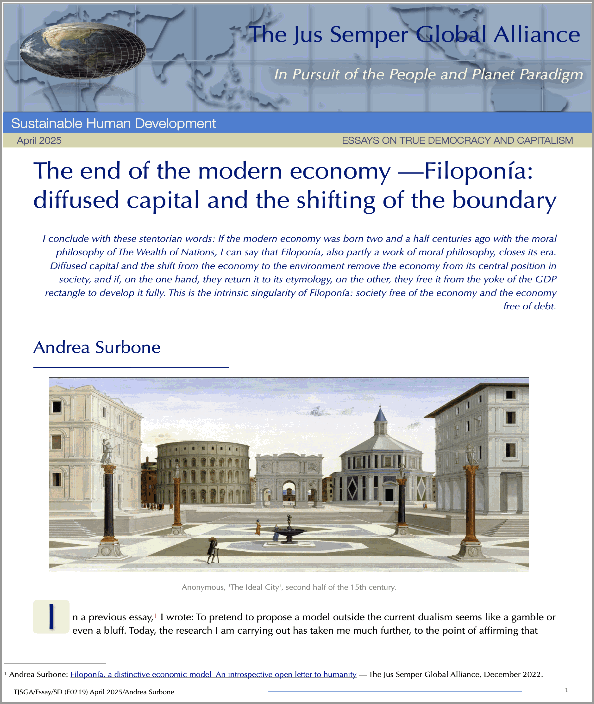
I conclude with these stentorian words: If the modern economy was born two and a half centuries ago with the moral philosophy of The Wealth of Nations, I can say that Filoponía, also partly a work of moral philosophy, closes its era. Diffused capital and the shift from the economy to the environment remove the economy from its central position in society, and if, on the one hand, they return it to its etymology, on the other, they free it from the yoke of the GDP rectangle to develop it fully. This is the intrinsic singularity of Filoponía: society free of the economy and the economy free of debt.
Disponibile anche in italiano qui.
_________________________________








Nature-Based Solutions for Conservation and Food Sovereignty in Indigenous Communities of Oaxaca
The increasing demand for food and the overexploitation of natural resources rapidly deplete the planet’s ecosystems, highlighting the urgent need for sustainable alternatives. Nature-based solutions effectively promote agricultural sustainability and environmental conservation but require continuous financial and political support to overcome existing barriers. This research examines these solutions’ effectiveness in Santa María Jacatepec, a biocultural region of Indigenous peoples in the Papaloapan Basin, Oaxaca, Mexico. A mixed-methods approach combining quantitative and qualitative analyses uses National Institute of Statistics and Geography data to evaluate socioeconomic and environmental indicators. The results indicate that despite pressures to develop cattle ranching, communities have maintained rain-fed agriculture, especially the milpa system, ensuring food sovereignty and preserving agricultural biodiversity. Additionally, implementation of Voluntarily Conserved Areas has facilitated access to payments for environmental services, incentivising ecosystem protection. However,financial and structural challenges persist, limiting the expansion of these solutions. Santa María Jacatepec exemplifies how Indigenous communities can apply nature-based solutions to strengthen agricultural sustainability and environmental conservation. Integrating traditional knowledge and strengthening conservation policies can enhance community resilience and ensure sustainable development amid increasing pressure on natural ecosystems.
______________________________________________
The Perpetual Storm
There is a vast and fatal lack of awareness of the reality we are about to face on the coastline that saw the birth of modern civilisation.
I don't like writing this, nor do I always like knowing what I know. However, I like it even less that, knowing what I know, more people don't know because what is at stake is absolutely incommensurable. When so much is at stake, the comfortable silence of those who know can be as eloquently treacherous as the worst of lies.
We are experiencing increasingly frequent floods and extreme phenomena throughout Europe and North Africa, originating in the Mediterranean. That overheated raft is mutating into a jacuzzi.
In any case, if anyone is interested in the future, perhaps they only need to learn from the past, from around 12,000 years ago – a different period of instability, but one that shares features with the one we are about to experience, called the Younger Dryas. There is an enormous and fatal lack of awareness of the reality we are about to face on the coastline that saw the birth of modern civilisation. And it has a lot to do with the increasing radiation being absorbed by the Earth and the accelerated melting of the ice caps at both poles.
But above all, the fact that we do not react, that we continue to build even closer to the beach, that we do hardly anything that needs to be done, has to do with the fact that the economic system we have built is allergic to the truth.
Who knows how many jobs and billions of euros in investment and property depend on not accepting the actual limits set by physics, geography, biology and common sense. The biggest problem is that the economic system's greed for lies – because it is based on the great lie that it is possible to grow forever on a finite planet – is infecting the rest of us and gradually leading us towards the growth of fascism, due to the fascism hidden behind the lie of growth itself.
______________________________________________
The MAGA Ideology and the Trump Regime
One week after the January 20, 2025, inauguration of Donald Trump in his second stint as U.S. president, Matthew J. Vaeth, acting director of the Office of Management and Budget (OMB), issued a memorandum to federal departments and agencies ordering a temporary pause of agency, grant and loan, and financial assistance spending throughout the federal government. This was the opening shot in what the right has called the “Cold Civil War.” The order for a general freeze on federal civilian spending was most likely written by the incoming 2025 OMB director, Russell Vought, then awaiting confirmation by Congress. For Vought “the stark reality in America is that we are in the late stages of a complete Marxist takeover of the country” and that these enemies “already hold the weapons of the government apparatus,” which “they have aimed…at us.” Vought headed the OMB during the first Trump administration and was a key architect of Project 2025, the plan for the transitionto a new absolutist executive, issued in 2022 by the right-wing Heritage Foundation. He wrote the chapter on the “Executive Office of the President of the United States” for Project 2025 and founded the Center for Renewing America, an active branch of Project 2025, which was charged with writing hundreds of executive orders in advance to be implemented immediately on the re-ascendance of Trump to the White House. Project 2025 included plans to close down whole federal departments, massively cut the federal work force, and drastically reduce federal expenditures, forcing states, local governments, universities, and the media to fall in line with the Trump regime’s dictates.
The current mobilisation of the lower-middle class by the right wing of monopoly capital, particularly, the tech, finance, and oil interests, is initially aimed at dismantling the present “administrative state,” replacing it with one more conducive to a neofascist project. Nevertheless, in the process, a widening political gap is already opening up between the billionaire rulers above and their MAGA army below, between different elements within the evangelical movement, and among those supporting a political dictatorship and those wishing to retain liberal-democratic constitutional forms.
In line with all movements in the fascist genus, the current regime will inevitably betray its mass MAGA supporters on the radical right, seeking to relegate them to a more and more subservient and regimented role and negating any policies in fundamental conflict with its capitalist-imperial ends. Nevertheless, a mass of think tanks and influencers has arisen that seek to rationalise the irrational, building on those ideological elements that appeal to a white lower-middle class, but ultimately serving the needs of the billionaire capitalist class. Understanding the basis of this new irrationalism and the forms of class rule associated with it is crucial in the counter-hegemonic struggle for a democratic, egalitarian, and sustainable—and thus socialist—future for humanity as a whole.
______________________________________________


This work is licensed under a Creative Commons Attribution-NonCommercial-NoDerivatives 4.0 International License.

Sustainability transitions in consumption-production systems
The need for faster and deeper transitions toward more sustainable development pathways is now widely recognized. How to meet that need has been at the center of a growing body of academic research and real-world policy implementation. This paper presents our perspective on some of the most powerful insights that have emerged from this ongoing work. In particular, we highlight insights on how sustainability transitions can be usefully conceptualised, how they come about and evolve, and how they can be shaped and guided through deliberate policy interventions. Throughout the paper, we also highlight some of the many how questions that remain unresolved and on which progress would be especially helpful for the pursuit of sustainable development. Our approach to these “how” questions on sustainability transitions draws on two strands of solution-driven research and policy advice: one emerging from studies of how human societies interact with nature and the other emerging from studies of how those societies interact with their technologies. Consumption-production systems have been a focus of extensive work in both strands. To help build bridges between them, we recently brought together a cross-section of relevant scholars for a PNAS Special Feature on “Sustainability transitions in consumption-production systems.” Their contributions are summarised in a companion paper we have written to introduce the Special Feature [F. W. Geels, F. Kern, W. C. Clark, Proc. Natl. Acad. Sci. U.S.A. (2023)]. We draw on that work in the Perspective we present here as well as our reading of the relevant literatures.
__________________________________
Industry 4.0: Gene Editing Is Pollution
When new technologies are being developed, human imagination is often blindsighted by their revolutionary potential, leaving harms and dangers unpredicted or unnoticed until it is too late to rein them in. Now, industrial-scale biological engineering poses a similar problem. To make sure this technology stays within humane limits, we need to expand the moral circumference of what we see as pollution – i.e., to adopt an outlook that regards non-human organisms as possessing agency, dignity, and purpose.
________________________________
The United Nations on Palestine
Israel’s (or the Zionist entity’s) ongoing extermination of the Palestinian population in Gaza and its uprooting of the population in the West Bank, with the backing of the United States and other Western governments, is the primary instance of genocide in the twenty-first century. It has destroyed any pretense of a commitment to universal human rights on the part of the West and has brought imperialism and settler colonialism in their most brutal forms right before the eyes of the entire world. An indication of the opposition to these developments in the world at large is revealed by the fifty-fifth Report of the Special Committee to Investigate Israeli Practices Affecting the Human Rights of the Palestinian People and Other Arabs ofthe Occupied Territories presented to the United Nations (with an introductory note by UN Secretary-General António Guterres) on September 20, 2024.
______________________________________________
Overlay of the Absolute Law of Environmental Degradation on the Absolute Law of Capital Accumulation in South America — A Trigger for Climate Collapse
Capitalism's dependence on South America is reaching exponential levels, on the verge of surpassing everything previously known in terms of magnitude, intensity, and territorial expansion. It encompasses the Great Expropriation of land and territories belonging to Indigenous Peoples and agrarian communities. The externalisation of eco-environmental fractures directly intervenes in the superimposition of the absolute general law of environmental degradation on the general law of capitalist accumulation, with the consequent collapse of the climate. This is a historic event in the course of capitalism and unprecedented in the history of the Earth. The climate emergency presents an opportunity to create contexts for establishing eco-socialism, the only alternative for present and future survival.
__________________________________
