Transitioning to Geocratia — the People and Planet and Not the Market Paradigm — First StepsParting from the fact that saving Planet Earth, our home, changes everything, we need to build a new ethos where the majority of humankind commits to a system whose only purpose is the pursuit of the welfare of people and Planet Earth. This requires that all Earth resources necessary for the enjoyment of life of all living things be managed to achieve true long-term sustainability. — Álvaro J. de Regil 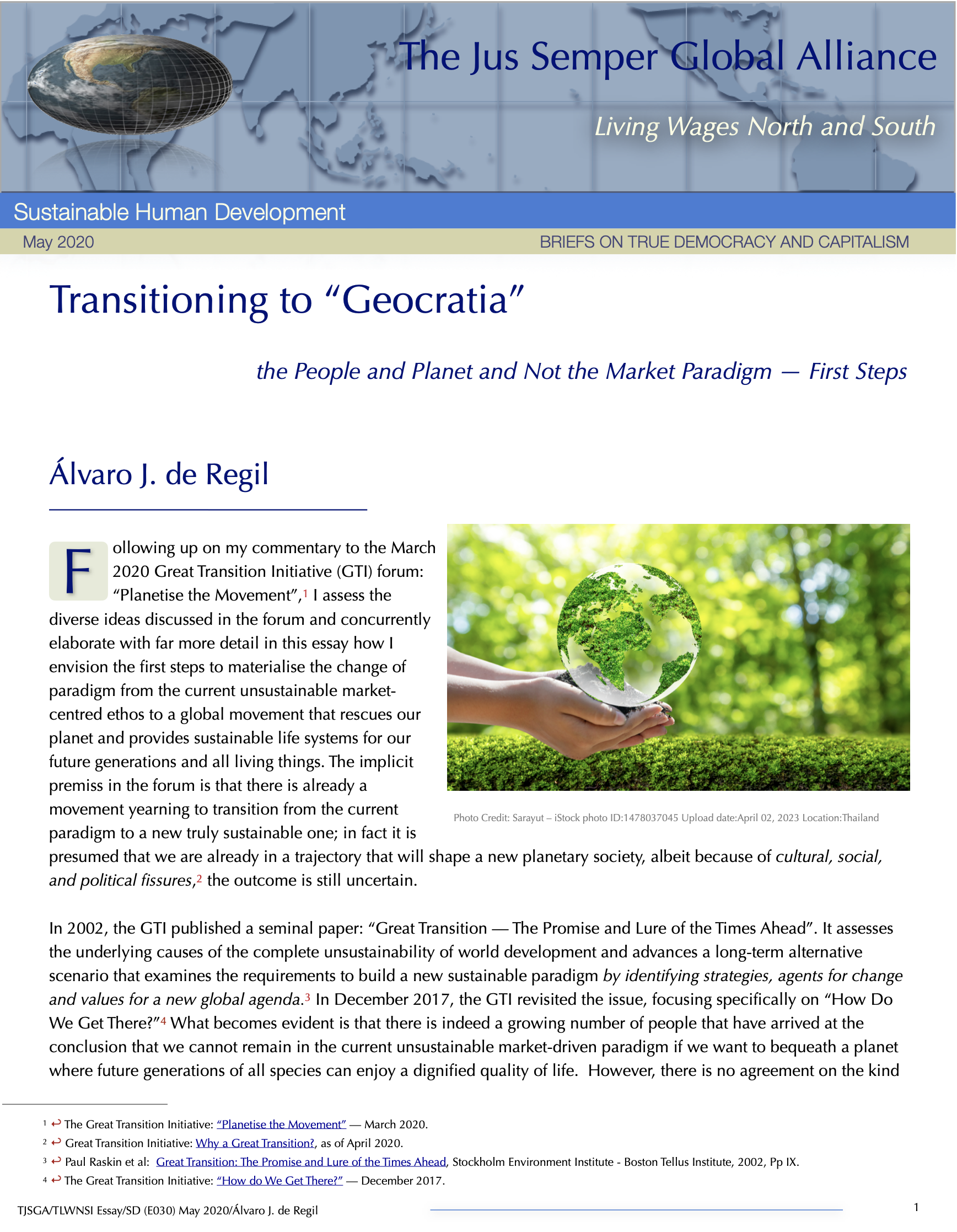
The Unbearable Unawareness of our Ecological Existential CrisisOver the past two years, the full report on Climate Change Mitigation by IPCC scientists, as well as research from other centres such as the Stockholm Resilience Centre, has consistently confirmed that we are on a doomsday trajectory. Unless we move rapidly in the opposite direction, the chances that we will face planetary catastrophes that seriously threaten the existence of life on our planet in the next twenty years are realistic and probable. Unsustainable capitalism keeps us deluded and largely unaware that we are on the brink of a serious existential risk. Therefore the great challenge is to provoke the awareness and critical thinking of ordinary citizens. Only a Citixens Revolution can stop our demise, but capitalism’s behemoth keeps people deceitful and mostly unaware of being on the verge of a catastrophic end. We must arouse Now! –– Álvaro J. de Regil 
Earth beyond six of nine planetary boundariesThe update of the planetary boundaries framework reveals that six of the nine boundaries have been transgressed, suggesting that the Earth is now outside the safe operating space for humanity. Ocean acidification is about to be exceeded, while aerosol loading exceeds the limit regionally. Stratospheric ozone levels have recovered slightly. The transgression level has increased for all boundaries previously identified as exceeded. Given that primary production drives the biosphere functions of the Earth system, human appropriation of net primary production is proposed as a control variable for the functional integrity of the biosphere. This boundary has also been transgressed. Modeling the Earth system with different levels of transgression of climate change and Earth system boundaries illustrates that these anthropogenic impacts on the Earth system must be considered in a systemic context. —Katherine Richardson et al 
Value Transfer and Labour Arbitrage Based on Unequal Exchange: The Case of Mexico – United StatesUnequal exchange is a key concept in Marxist critiques of the capitalist global system, proposing that uneven development between the global core and periphery is driven by the core's retention of a substantial portion of value produced in the periphery. This occurs by establishing average global profit rates and international market prices across the global market despite stark wage disparities. This study highlights that wage disparities are crucial for monopoly capital accumulation, resulting in diminished wages and precarious social conditions in Mexico, with a labour value drainage of $135 billion dollars in 2023, representing 7.5% of its GDP. —Mateo Crossa Niell – Álvaro de Regil Castilla 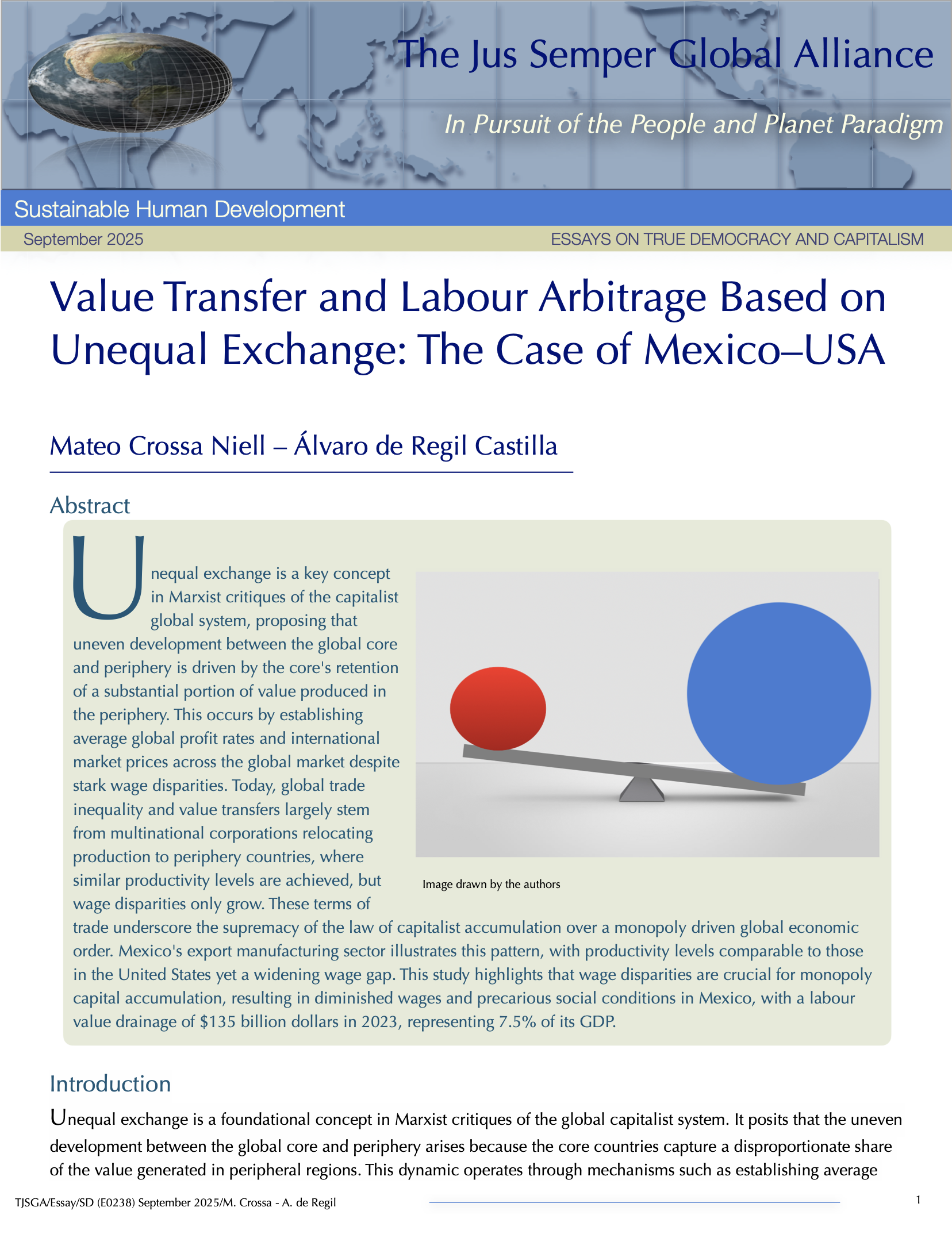
Post-growth: the science of wellbeing within planetary boundariesThere are increasing concerns that continued economic growth in high-income countries might not be environmentally sustainable, socially beneficial, or economically achievable. In this Review, we explore the rapidly advancing field of post-growth research, which has evolved in response to these concerns. The central idea of post-growth is to replace the goal of increasing GDP with the goal of improving human wellbeing within planetary boundaries. Key advances discussed in this Review include: the development of ecological macroeconomic models that test policies for managing without growth; understanding and reducing the growth dependencies that tie social welfare to increasing GDP in the current economy; and characterising the policies and provisioning systems that would allow resource use to be reduced while improving human wellbeing. —Giorgos Kallis et al 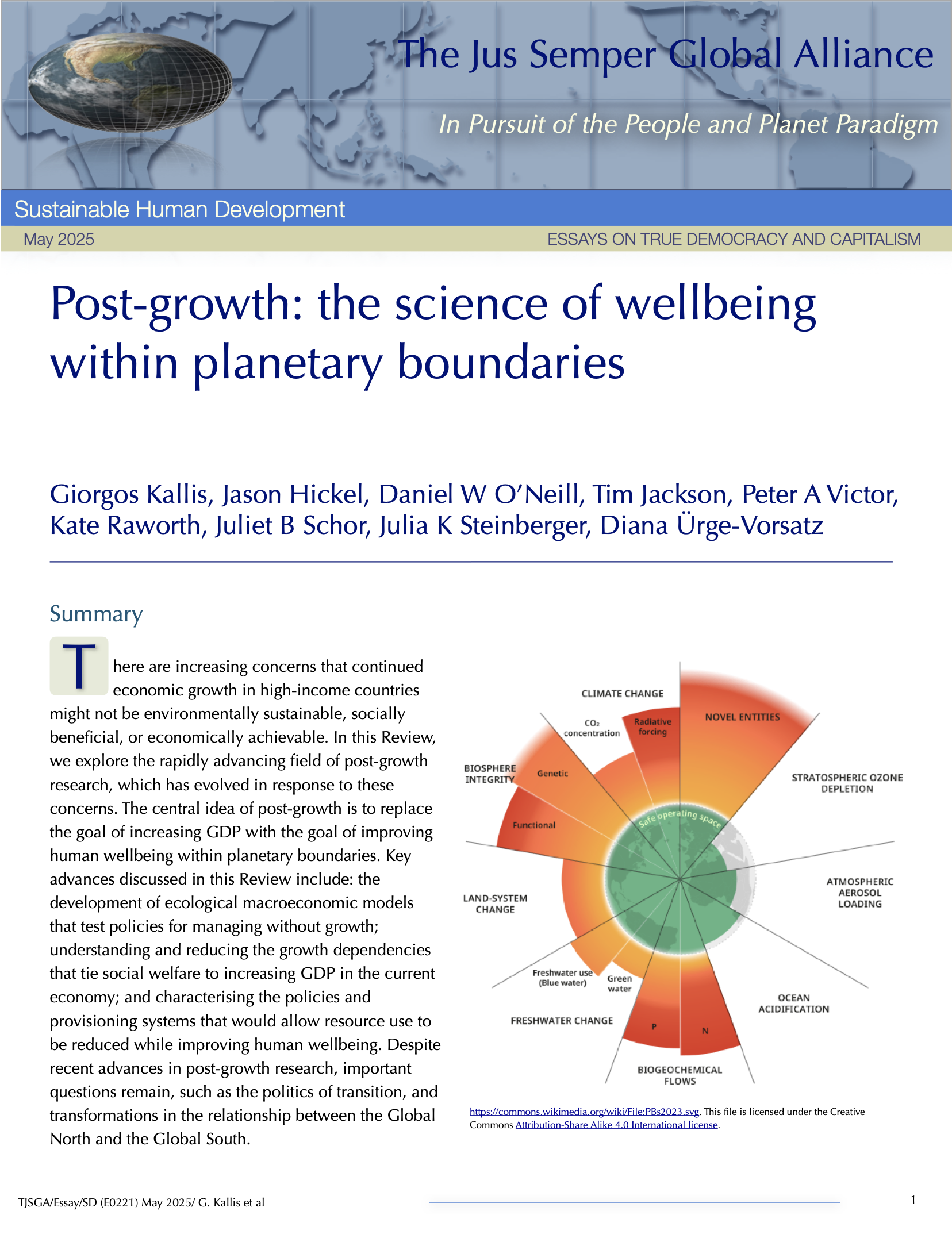
Safe and Just Earth System BoundariesHumanity is well into the Anthropocene, the proposed new geological epoch where human pressures have put the Earth system on a trajectory moving rapidly away from the stable Holocene state of the past 12,000 years, which is the only state of the Earth system we have evidence of being able to support the world as we know it. Seven of eight globally quantified safe and just Earth System Boundaries (ESB) and at least two regional safe and just ESBs in over half of global land area are already exceeded. We propose that our assessment provides a quantitative foundation for safeguarding the global commons for all people now and into the future. — Johan Rockström et al 
Unequal exchange of labour in the world economyResearchers have argued that wealthy nations rely on a large net appropriation of labour and resources from the rest of the world through unequal exchange in international trade and global commodity chains. Here we assess this empirically by measuring flows of embodied labour in the world economy from 1995–2021, accounting for skill levels, sectors and wages. We find that, in 2021, the economies of the global North net-appropriated 826 billion hours of embodied labour from the global South, across all skill levels and sectors. The wage value of this net-appropriated labour was equivalent to €16.9 trillion in Northern prices, accounting for skill level. This appropriation roughly doubles the labour that is available for Northern consumption but drains the South of productive capacity that could be used instead for local human needs and development. While Southern workers contribute 90% of the labour that powers the world economy, they receive only 21% of global income. —Jason Hickel et al 
Community-Based Adaptation to Climate Change: Core Issues and Implications for Practical ImplementationsAccording to current forecasts, global heating is likely to exceed 2.8 °C by the end of this century. This makes substantial adaptation measures necessary to secure a broad basis for livelihood provision and the conservation of biodiversity. While the implementation of top-down and technocratic adaptation efforts predominates, related adaptation shortcomings of a socio-economic and ecological nature are becoming more and more apparent. Community-based adaptation (CBA), with its participatory, inclusive and needs-based bottom-up approach, offers a promising and powerful alternative. This article uses a semi-systematic literature review approach to screen the current literature and identify core issues of CBA. ––Tom Selje et al 
Arghiri Emmanuel and Unequal Exchange: Past, Present, and Future RelevanceTo paraphrase Mao Zedong: Where do ideas come from? Do they drop from the sky? No, they come from social practice, the struggle for production, the class struggle, and scientific work. There is a close link between what goes on in the world, the project of classes and states, and theoretical and political debates. This is Arghiri Emmanuel’s life story, of which his theory of unequal exchange is a prime example. —Torkil Lauesen 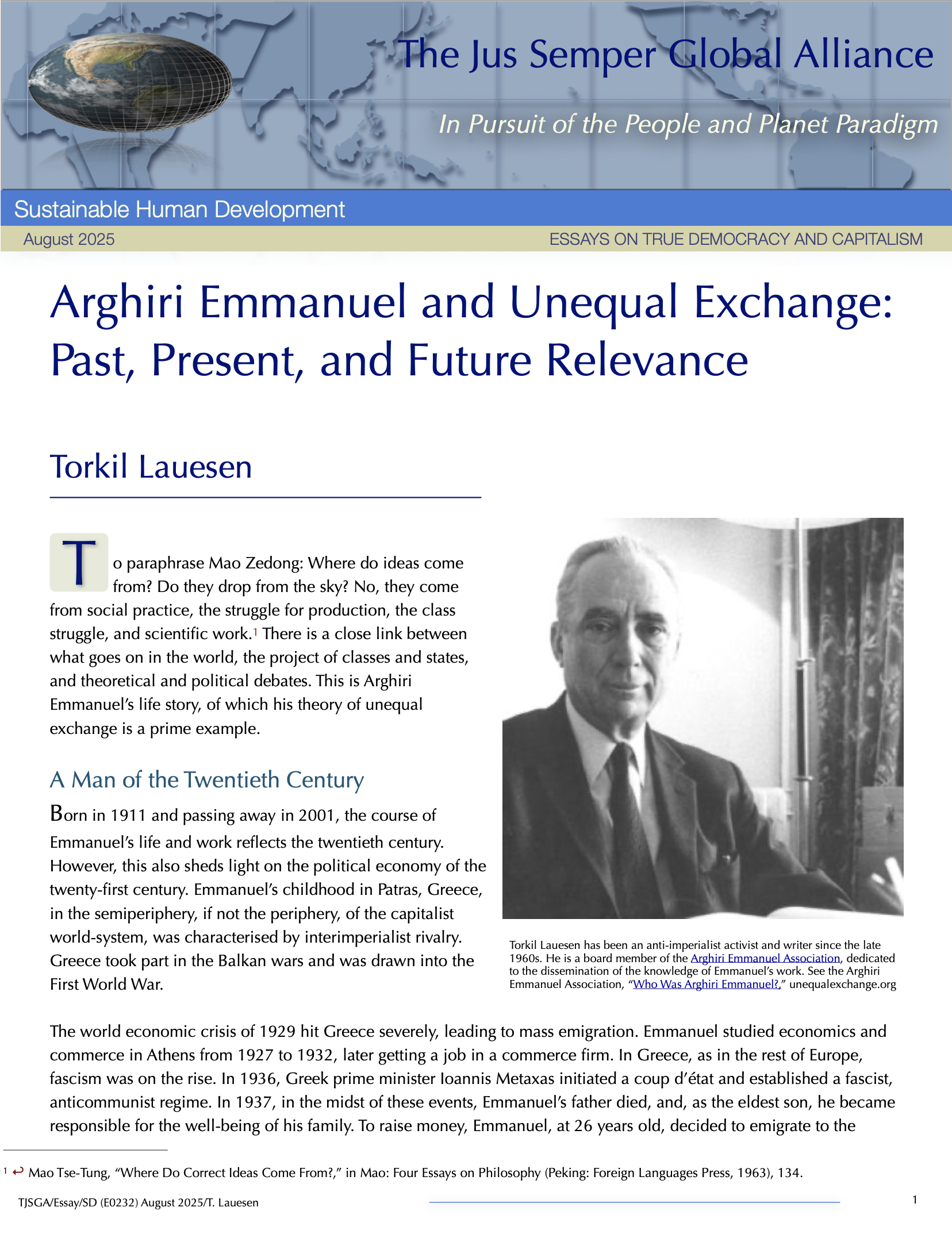
Controversial Demographic Projections Under Climate Collapse in 2050 - South and Mesoamerica in a Global ContextThe corporate sector is building another aggressive re-engineering of global agrifood systems in South America and Mesoamerica. The region represents a pillar for global food security, warns the UN in the New Mission. Capitalist euphoria assumes 10 billion inhabitants by 2050. This is forging higher agricultural productivity, innovation, digitalisation and the expansion of standardised agriculture. Thus, they produce and market food destined for populations with some or enough consumption capacity, overconsumption and waste of food with equivalent carbon footprints. –– Nubia Barrera Silva 
Capitalist reforms and extreme poverty in China: unprecedented progress or income deflation?It is widely believed that China's socialist economy had relatively high rates of extreme poverty while the capitalist reforms of the 1980s and 1990s delivered rapid progress. This narrative relies on World Bank Hoever, from 1981 to 1990, when most of China’s socialist provisioning systems were still in place, the country’s extreme poverty rate was on average only 5.6 per cent, substantially lower than in capitalist economies of comparable size and income at the timeMoreover, extreme poverty in China increased during the capitalist reforms of the 1990s, reaching a peak of 68 per cent,as privatisation inflated the prices of essential goods and thus deflated the incomes of the working classes. These results indicate that socialist provisioning policies can be effective at preventing extreme poverty, while market reforms may threaten people's ability to meet basic needs. —Dylan Sullivan, Michail Moatsos and Jason Hickel 
Planetary Health Check 2025 – A Scientific Assessment of the State of the Planet - Executive SummaryThe Planetary Health Check (PHC) report provides an assessment of the state of our planet. It is based on the Planetary Boundaries (PBs) – the nine processes that are known to regulate the stability, resilience (ability to absorb disruptions) and life-support functions of our planet. Each of these processes, such as Climate Change or Ocean Acidification, is currently quantified by one or two control variables. The 2025 PHC report concludes that seven out of nine Planetary Boundaries have been breached, with all of those seven showing trends of increasing pressure – suggesting further deterioration and destabilisation of planetary health in the near future. –Potsdam Institute for Climate Impact Research 
“The history of capitalism is a history of recurring genocides” – Interview with Jason W. Moore, historian and geographerTalking to Jason W. Moore (Oregon, 1971) means talking about the Capitalocene, a concept he proposed to ‘ridicule the authoritarian thinking that dates back to Malthus in the late 18th century,’ where overpopulation was the source of inequality. For the historian, geographer and professor of sociology, climate change is the responsibility of the capitalist class and the 150 transnational corporations responsible for more than 70% of global carbon and greenhouse gas emissions since 1850. The climate crisis, he concludes, is a labour issue, a class war. In this interview, Moore also develops the idea of “cheap nature” and “attempts from above to devalue human life”. He also analyses the genocide in Gaza – “unique, but not exceptional” – and provides key tools for organising anti-systemic movements that can respond to capitalism in crisis. –Adriá Rodríguez 
How much growth is required to achieve good lives for all?Some narratives in international development hold that ending poverty and achieving good lives for all will require every country to reach the levels of GDP per capita that currently characterise high-income countries. However, this would require increasing total global output and resource use several times over, dramatically exacerbating ecological breakdown. Furthermore, universal convergence along these lines is unlikely within the imperialist structure of the existing world economy. Here we demonstrate that this dilemma can be resolved with an approach rooted in needs-based analyses, increasing the specific forms of production necessary to improve capabilities and meet human needs at a high standard, while ensuring universal access to key goods and services through public provisioning and decommodification. —Jason Hickel / Dylan Sullivan 
Energy transitions and degrowth: an interview with Manuel Casal LodeiroOn the occasion of the publication of Las verdades incómodas de la Transición Energética (The Uncomfortable Truths of the Energy Transition), a group of Philosophy students from the Autonomous University of Madrid conducted this interview with the author, Manuel Casal Lodeiro, in the spring of 2025. –Manuel Casal Lodeiro, Francisco Alejandro Carrasco, Miguel Ángel Villar, Alejandra Santos, Aida Quiralte 
Einstein’s “Why Socialism?” and ‘Monthly Review’: A Historical IntroductionAlbert Einstein, the world's most famous theoretical physicist and its most celebrated scientist, had fled Germany after the rise of Adolf Hitler, emigrating to the United States in 1933, where he became a citizen in 1940. However, for J. Edgar Hoover's FBI, Einstein remained a dangerous and anti-American figure who threatened the internal security of the United States by his very presence in the country. His 1949 publication of an article entitled ‘Why Socialism?’ for the new magazine Monthly Review: An Independent Socialist Magazine was thus seen by the FBI as direct confirmation of his strong ‘Communist sympathies.’ —John Bellamy Foster 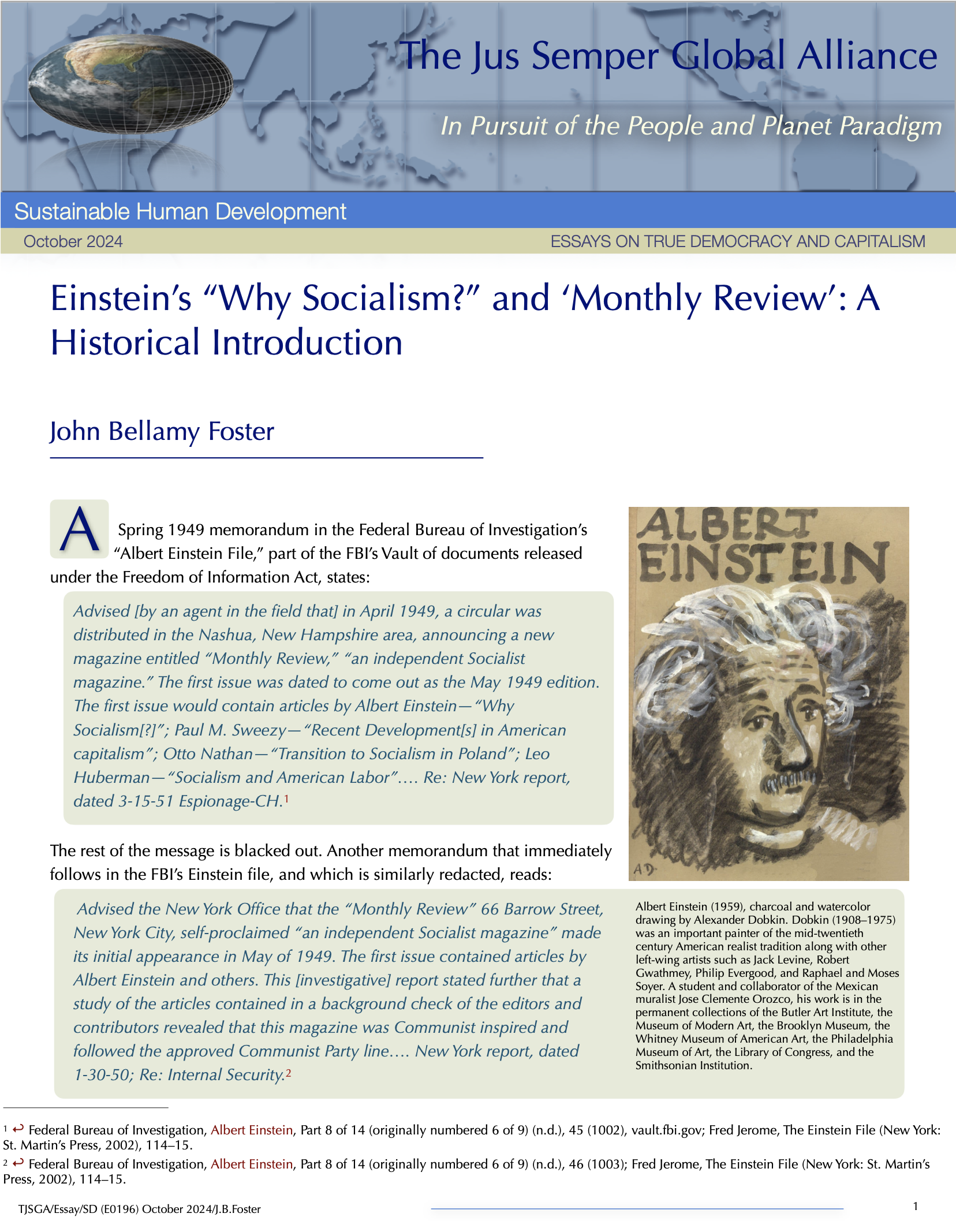
The pressing priority of saving the AmazoniaThe world's most biodiverse region is threatened by deforestation levels close to the point of no return. Despite this, the countries involved failed to reach agreements at the last summit in Brazil in August. –– David Roca Basadre 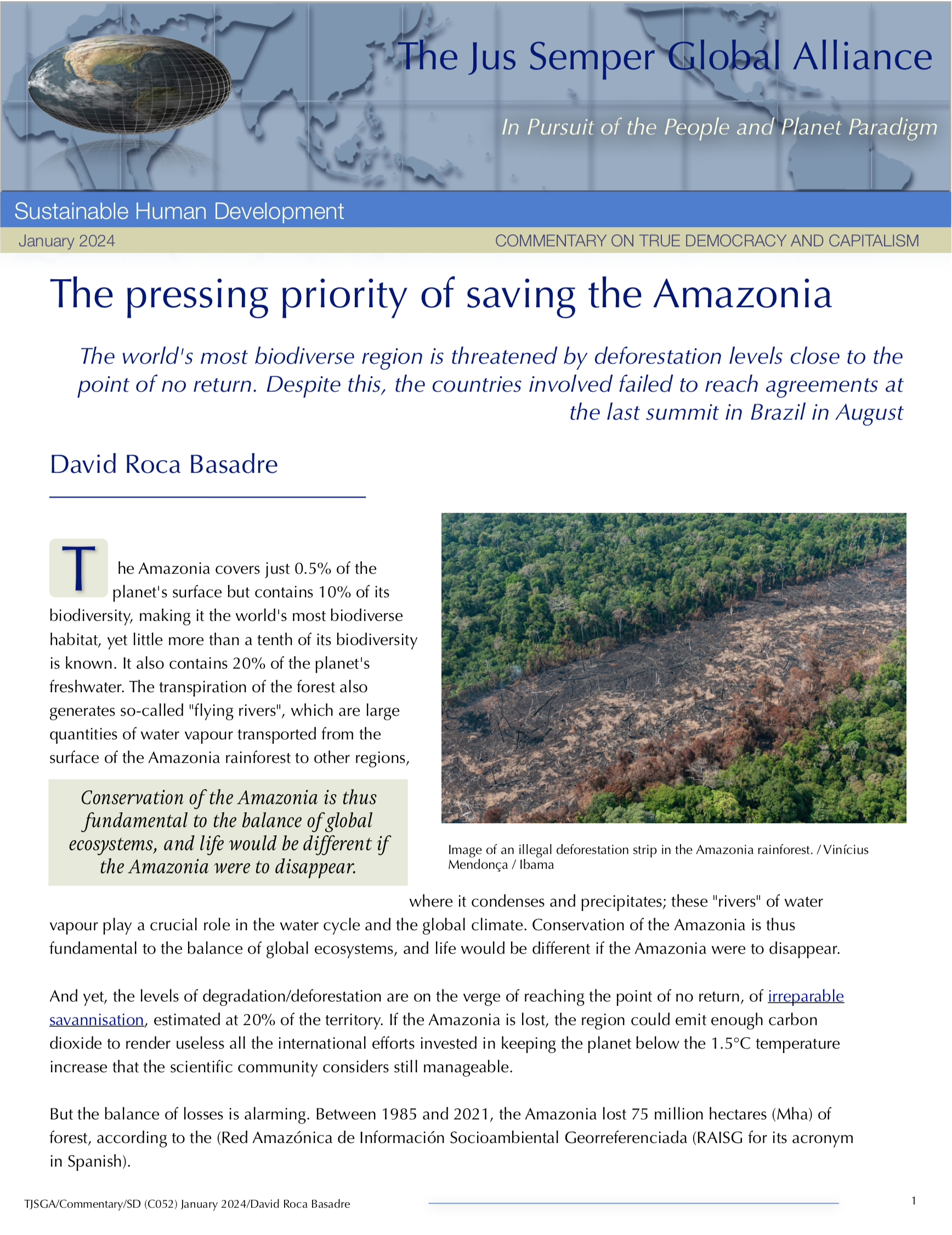
Chinese-Style Modernisation: Revolution and the Worker-Peasant AllianceIn Western ideology, China is no longer perceived as a socialist country, although traces of its revolutionary legacy remain. According to this perspective, the objective of modernisation in China has replaced that of revolution, which has in turn played an important role in stabilising the global capitalist system. In other words, China’s integration into global capitalism has helped to solidify the process of capitalist globalisation. Consequently, modernisation and revolution, as well as globalisation and revolution, are presented as dichotomies. Today, the world remains confined by dichotomous thinking. This thinking, however, does a disservice to understanding China’s path of development toward socialist modernisation and national sovereignty since the People’s Republic of China (PRC) was formed in 1949. Lu Xinyu 
Capitalism and Extreme Poverty: A Global Analysis of Real Wages, Human Height, Mortality Since the Long 16th CenturyThis paper assesses claims that, prior to the 19th century, around 90% of the human population lived in extreme poverty (defined as the inability to access essential goods), and that global human welfare only began to improve with the rise of capitalism. The rise of capitalism caused a dramatic deterioration of human welfare. In all regions studied here, incorporation into the capitalist world-system was associated with a decline in wages to below subsistence, a deterioration in human stature, and an upturn in premature mortality. –– Dylan Sullivan and Jason Hickel 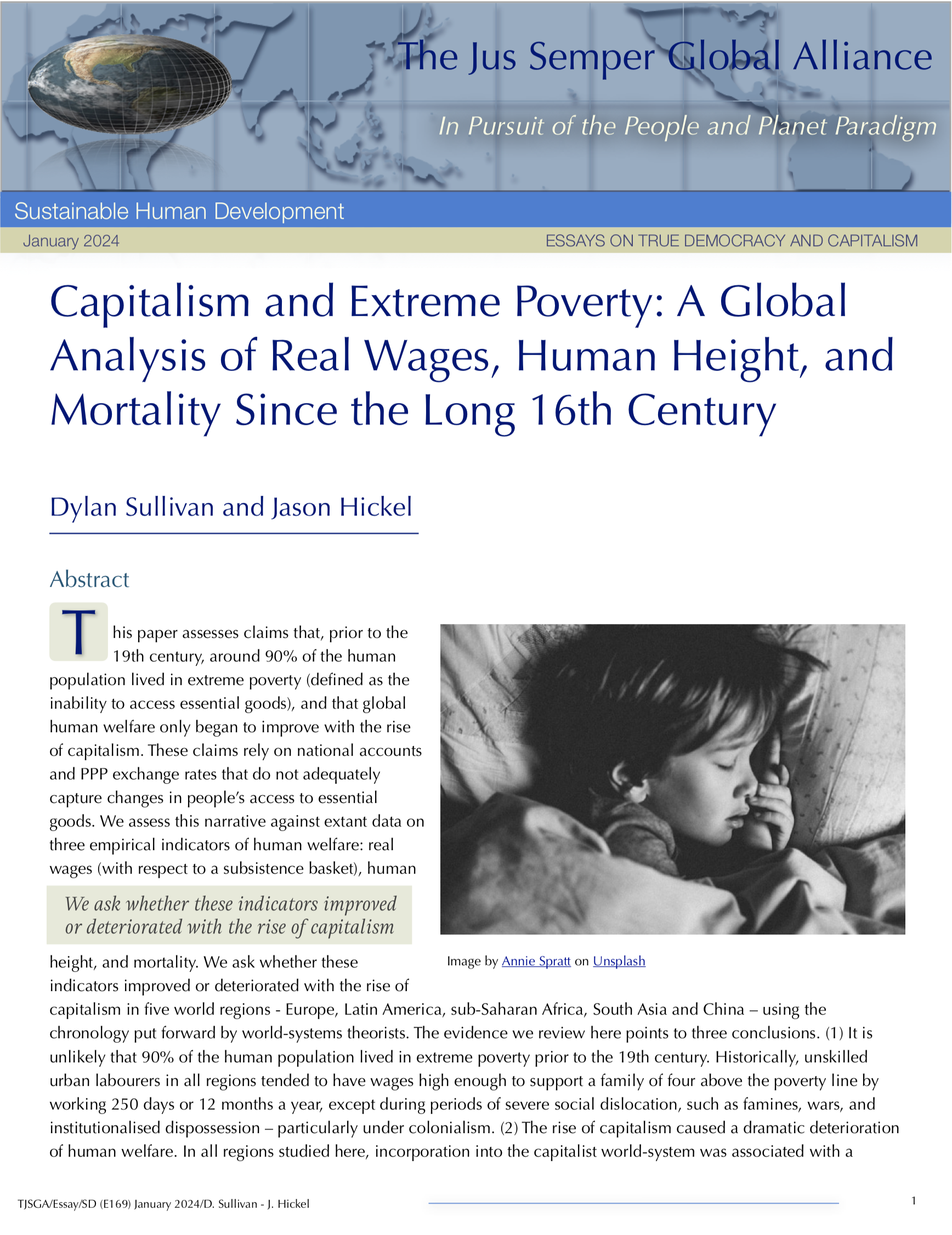
The integrated guide to imperialism in VenezuelaThe kidnapping of Venezuelan President Nicolás Maduro and his wife, Cilia Flores, by US imperialism marks a new and extremely serious escalation in the sustained aggression against Venezuela's sovereignty. Far from being an isolated or exceptional event, this episode is part of a prolonged offensive that combines economic and financial warfare, political delegitimisation, military coercion and the production of media consensus and cultural hegemony. In the face of information confusion, propaganda, and the proliferationof speculative narratives, this article proposesa framework for analysing the structural logic of contemporary imperialism and placing this attack within the siege Venezuela has endured for decades. –Alejandro Pedregal 
Climate resilience through ecocultural stewardshipThe climate crisis has exacerbated many ecological and cultural problems including wildfire and drought vulnerability, biodiversity declines, and social justice and equity. While there are many concepts of social and ecological resilience, the exemplar practices of Indigenous stewardship are recognised in having sustained Indigenous peoples and their countries for millennia and past climate change events. California has been at the crossroads of many of these issues, and the historic and current contributions of Indigenous peoples to addressing these provide an excellent study of ecocultural stewardship and leadership by Indigenous peoples to achieve climate resilience. –Don L. Hankins 
Eco-Marxism and Prometheus UnboundIn the West, ecological modernisation as a model for addressing environmental problems has long been the subject of critique by ecosocialists and by radical ecologists in general. In contrast, in China, ecological modernism as a way of redressing environmental problems has the strong backing of ecological Marxists. The primary reason for these differing approaches should be obvious. In the West, the notion of ecological modernisation, while unobjectionable in itself as part of a comprehensive process of environmental change, has come to stand ideologically for the restrictive model of capitalist ecological modernisation. Here it is suggested that environmental problems can be addressed by technological means alone within the established social relations of capitalism in a purely reformist context. Distinct from this, socialist ecological modernisation, as envisioned in China and in a few other postrevolutionary states, is substantively different. It requires a break with the social relations of capital accumulation, facilitating changes in the human relation to nature that are of a revolutionary character, aimed at the creation of an ecological civilisation geared to sustainable human development. –John Bellamy Foster 
«Geocratia proposes to establish a social contract with our planet» – A conversation with his ideologueOn the occasion of the publication of his latest essay (2026), Geocratia, the paradigm that goes for the welfare of people and the planet and not the market, we wanted to talk to the Mexican author to explore his original political proposal. –Álvaro J. de Regil and Laura G. Vales 
China's "Triple Revolution Theory" and Marxist AnalysisIn what is known as the New Era, beginning in 2012 with the rise of Xi Jinping as chairman of the Communist Party of China and president of the People’s Republic of China, there has been a steady advance of the Sinicisation of Marxist theory and of the concept of socialism with Chinese characteristics, spreading to all aspects of society and adopted as a governing principle for China as a whole. These shifts in the historical progression of the Chinese Revolution have led to various attempts to theorize the three stages of the revolution. Here, its authors provide what they call “Triple Revolution Theory.” Their article is a product of the Sinicisation of Marxism and is primarily written for a Chinese audience and for Marxists worldwide who have been following the progress of the Chinese Revolution. Since their argument is both logical and historical in character, it should be readily understandable to patient and attentive readers. —Cheng Enfu y Yang Jun 
The age of electricity is already upon us, but demand for fossil fuels will continue to grow until 2050The International Energy Agency (IEA) confirms that advances in electrification point to a decline in the use of polluting fuels. However, under current policies, demand for oil and gas will continue to rise over the next 25 years. In the midst of COP 30, the IEA published its annual World Energy Outlook report, which analyses and projects global trends in energy supply and demand. The document confirms that the planet has definitively entered the ‘age of electricity’, an indispensable foundation for decarbonisation. However, there are many warning signs and concludes that governments' ambition to mitigate the worst effects of climate change is weakening. –Andrés Actis 
Geocratia, the Paradigm that Pursues the Well-being of People and the Planet, Not the MarketOrganising to save ourselves by saving the planet is the most important thing we will ever undertake in our lives; it is our last chance to have a future. Geocratia is a concept that it is anti-capitalist by nature. Attesting year after year how those in absolute control of the reins of power insist on maintaining the same trajectory that ensures a high existential risk to humans and non-humans, I am reviewing and deepening the geocratic proposal. The first part situates us in the context in which we find ourselves, from a political, ecological, economic, and consumer perspective. The second part presents the proposal to transition to Geocratia in its symbiosis with the Gaia hypothesis, its structure and the practical way to implement it. It concludes by suggesting how to take the first step at the community level, raising awareness and forming citizen cells, the most basic and organic form of transitioning to Geocratia. –Álvaro J. de Regil 
Marx and Communal SocietyMarx’s approach to communal society is of genuine significance not only in understanding his thought as a whole, but also in helping guide humanity past the iron cage of capitalist society. In addition to presenting a philosophical anthropology of communism, he delved into the history and ethnology of actual communal social formations. This led to concrete investigations into communal production and exchange. All of this played into his conception of the communism of the future as a society of associated producers. In our time, communal production and exchange, and elements of a communal state, have been developed, with varying degrees of success, in a number of socialist societies following revolutions, notably in the Soviet Union, China, Cuba, Venezuela, and elsewhere around the world. Marx’s understanding of the history, philosophy, anthropology, and political economy of communal/collective society is thus an important source of insight and vision, not only with respect to the past, but also the present and future. –John Bellamy Foster 
Ecological Transformation, Agriculture, and the Survival of HumanityThe three articles in this issue of the international edition of Wenhua Zongheng (文化纵横) offer complementary views on issues that are fundamental to the survival of humanity: food production, agroecology, environmental restoration, and renewable energies. Committed to the causes of their people and of all humanity, the Chinese authors present readers with concrete experiences from the reality of their country. –João Pedro Stédile 
Socialist Communes and Anti-Imperialism: The Marxist Approach“The direct antithesis to the empire was the Commune.” –Karl Marx, The Civil War in France. With the goal of determining when and where a socialist commune qualifies as anti-imperialist, I will look at Karl Marx’s own reflections on the commune, which took on greater centrality in his vision of social change in his last years, taking them to be a kind of model for what it is to be a socialist, anti-imperialist commune. My aim will be to show how these reflections by Marx, despite being most fully developed in his last period (1870–1883), are nevertheless connected to his whole theoretical apparatus and project. That project involves a revolutionary intervention in the state, followed by a transformation of the whole economy and society, and it is by its very nature opposed to imperialism. Thus, if communes are assumed in the way defended by Marx, they will be part of an unfolding anticapitalist and anti-imperialist strategy. –Chris Gilbert 
The authoritarian tendencies of 21st-century capitalismA major economic, political, cultural and geopolitical battle is being waged in the context of capitalism's quest for repositioning and its authoritarian intentions to reorganise the global geo-economic order. The quest for self-determination is a constant theme in Iberian America and the Caribbean. At different times and in various contexts, proposals for sovereignty emerge and become the backbone of challenging projects for change, sometimes localised and sometimes systemic, such as those that have shaped the region's destiny so far this century. At the same time, there are recurring bouts of authoritarianism which, with different nuances, are also a constant feature, serving to maintain the prevailing conditions of subjugation. –Irene León 
Beyond GrowthSociety does not exist. There are individual men and women, and there are families.” These words, spoken by Margaret Thatcher in1987, perfectly reflect the philosophy behind the policies generated by the so-called Washington Consensus (1989), imposed by Reagan and Thatcher after the great global crisis of the 1970s. This philosophy and the measures implemented placed the market above all else and institutionalised liberalisation, privatisation, deregulation, tax reduction or elimination, and the absence of control over capital markets… The state disappeared to give prominence to private companies. As a result, inequality reached unprecedented levels, the arms industry continued to grow, and social protection budgets were drastically reduced. Bringing this up makes a lot of sense when we talk about how the planet has had enough, has said enough is enough to the destruction of nature and the environment caused by these policies and human beings. –Lourdes Lucía – Alberto Fraguas 
From Anti-Francoism to Fridays for Future: Environmentalism in Spain Through the GenerationsIrene Rubiera and Pedro Costa were born more than 50 years apart, but they are both driven by the same passion: protecting the environment. Each of them represents a different generation of activists and embodies the evolving strategies, priorities, and challenges of environmentalism in Spain – from the anti-nuclear struggle under Franco’s dictatorship to the global climate movement sparked by Fridays for Future. What do they see when they look back on their paths, and how do they view the future of the movement? –Bernardo Álvarez, Irene Rubiera, Pedro Costa 
| ||
 | | |
Indigenous critiques and recommendations for reclaiming nature-based solutions
Indigenous peoples have long histories and diverse contemporary practices of caring for and enhancing biodiversity at different scales, in rural and urban contexts. As has been researched and documented by the Convention on Biological Diversity and others, Indigenous peoples globally only constitute 5% of the world’s population and control and care for just 20% of the Earth’s surface yet protect nearly 80% of the world’s remaining biodiversity. Indigenous peoples have forms of biodiversity conservation that could be characterised as “nature-based solutions” (NbS), or would they be culture-based solutions? Given the extraordinary diversity of Indigenous peoples globally, there will never be a “one size fits all” solution. Yetthere are general principles that have been articulated in the United Nations Declaration on the Rights of Indigenous Peoples that articulate global concepts of Indigenous Knowledge Systems (IKS) and Traditional Ecological Knowledge (TEK). IKS, TEK, and Native ways of knowing and caring for biodiversity can find both resonance and conflict with what is currently being called NbS. This article articulates Indigenous concerns and critiques of the conceptual and ontological framework of NbS, demonstrating that Indigenous Peoples’ knowledge systems include a similar framework but extend it to include a distinctly biocultural and relational orientation that does not make an artificial division between nature and culture. Different Indigenous perspectives and approaches to sustainability will be highlighted, including two case stories. We conclude with recommendations for respectful, just, decolonial, and transparent ways to explore greater resonance between NbS and Indigenous peoples’ rights. .______________________________________________
Research and analysis to provoke public awareness and critical thinking
We contribute to the liberalisation of the democratic instituions of society, for they have been captured by the owners of the market. They work in tandem with their market agents, who, posing as public servants, are entrenched in the halls of government. The political class has betrayed its public mandate and instead operates to impose a marketocratic state to maximise the shareholder value of the institutional investors of international financial markets. They own the global corporations and think they own the world on behalf of their very private interest.
Our spheres of action: true democracy – true sustainability – living wage – basic income – inequality – ecological footprint – degrowth – global warming –human development – corporate accountability – civil, political, economic, social, cultural and environmental rights, responsible consumption, sustainable autonomous citizen cells...

Parting from an ethos of true democracy and true sustainability, We, the citizenry, work to advance the paradigm whose only purpose is to go in pursuit of the welfare of People and Planet and NOT the market.

- TJSGA is member of:



- © The Jus Semper Global Alliance
| Home |
Overpopulation and sustainability
The progressive degradation of the environment
The deceptive dellusions of Green Capitalism
Textile sweatshops in the U.S.
Sustainable Wellbeing
Urban Commons
The Sixth Mass Extinction
Sustainble prosperity starts with reimagining education
Life beyond capital
Lost paradise? The cage of consumerism
Wellbeing matters
Speculative and parasite capital
The dispossessed
%2016.45.27.jpg?934 "Overpopulation and sustainability")
%2016.47.03.jpg?974 "The progressive degradation of the environment")
%2016.49.57.jpg?864 "The deceptive dellusions of Green Capitalism")
%2016.10.32.jpg?877 "Sustainable Wellbeing")
%2016.19.46.jpg?221 "Urban Commons")
%2016.10.54.jpg?697 "The Sixth Mass Extinction")
%2016.21.19.jpg?753 "Sustainble prosperity starts with reimagining education")
%2016.28.40.jpg?762 "Life beyond capital")
%2016.29.53.jpg?506 "Lost paradise? The cage of consumerism")
%2016.32.53.jpg?662 "Wellbeing matters")
%2016.36.12.jpg?37)
%2016.43.35.jpg?628 "Speculative and parasite capital")

%2016.45.27.jpg "Overpopulation and sustainability")


The Global Structural Crisis of Capital
I believe that it is not given to us to speak in terms of future centuries…we have no time to waste; the challenge is to save the conditions of life on this planet, to save the human species, to change the course of history, to change the world. —Hugo Chávez
The notion of a “global structural crisis of capital” defining our times was first introduced by István Mészáros in the third edition of his Marx’s Theory of Alienation in 1971, and in his Isaac Deutscher Memorial Lecture, “The Necessity of Social Control” that same year. In 1995 in Beyond Capital, Mészáros distinguished the emerging, epochal structural crisis of capital from the cyclical and conjunctural crises that are “capital’s natural mode of existence.” Today’s structural crisis, he explained, has four characteristics that distinguish it historically, focusing here primarily on its economic dimensions.
All of this signifies that the current mode of production is approaching the absolute limits of its mode of social metabolic reproduction, evident not simply in its growing economic contradictions—since production, consumption, and circulation define its internal structure—but also in every aspect of material reality. A structural crisis comes into play when not simply the “immediate limits” of the system but also its “ultimate limits” are in question, since this affects “the totality of a social complex.” This is particularly evident in the environmental realm, which capital, in its pursuit of endless accumulation, treats as consisting of mere barriers that need to be overcome or dumping grounds for its waste, rather than adhering to planetary boundaries and natural laws.
______________________________









“Environmental collapses have been accompanied by genocides”
Josefa Sánchez Contreras is a researcher and socio-environmental activist
Josefa Sánchez Contreras is a researcher and socio-environmental activist from the Angpøn (Zoque) community of Chimalapas in Oaxaca, Mexico. She holds a PhD in Sociology from the University of Granada, where she currently lectures in the Faculty of Social Sciences. She has published several works, including *Desojos Racistas, hacia un ecologismo anticolonial* (Anagrama, 2025) and *Colonialismo energético* (Ona, 2024), in which she analyses, among other issues, the relationship between colonialism, structural racism, and the current climate crisis.
______________________________________________

Democratising provisioning systems: a prerequisite for living well within limits
The core challenge of the 21st century, of achieving good living conditions for all, while bringing resource use and emissions down within planetary limits, is likely to be technically feasible. However, current political and economic trends perpetuate extractive practices and growth imperatives, where decisions that benefit vested interests at the expense of humanity and life on Earth are hidden behind capitalist market logics. To break this deadlock, we argue economic democratisation is necessary, bringing crucial economic decision-making into the sphere of democratic deliberation. We review existing proposals and argue that economic democracy requires more fundamental rethinking of social, political, and economic relations. We then explore these in three thematic areas: the deepeningof democracy, the importance of provisioning systems, and the provisioning logics within organisations. We conclude with a call to action for a revived coalition of environmental and social movements, focused on the crucial task of democratising the economy through its provisioning systems and organisations.
______________________________________________
Degrowth, global asymmetries, and ecosocial justice: Decolonial perspectives from Latin America
Degrowth literature predominantly states that degrowth strategies are meant from and for the Global North. While economic mainstream discourse suggests that the Global South still has to grow in terms of achieving development, degrowth proponents expect a reduction of material and energy throughput in the Global North to make ecological and conceptual space for the Global South to find its own paths toward ecosocial transformation. Based on a Latin American post-development and post-extractivist perspective and drawing on dependency theory, this article suggests another approach: first, it argues that the growth imperative, which in the peripheral world translates into the imperative to develop, also causes harm in societies of the Global South. Throughout Latin America, in the last decades, economic growth has mainly been achieved through extractivism with negative impacts, which are now being pushed further by green growth strategies. Second, I explore some possibilities for a cross-fertilisation between degrowth and International Relations scholarship, calling into question the assumption that degrowth in high-income countries would automatically ‘make space’ for the Global South to engage in self-determined paths of ecosocial transformation, as long as the structures, institutions, and rules of global governance and trade which secure profoundly asymmetric, colonial relations are not challenged.
______________________________________________


This work is licensed under a Creative Commons Attribution-NonCommercial-NoDerivatives 4.0 International License.

Imperialism in a Full World: Neomercantilism and the Return of the Zero-Sum Game
In September 2010, a Chinese fishing vessel was detained by the Japanese Coast Guard near the disputed Senkaku Islands. China’s unofficial response was to halt rare-earth exports to Japan—a country whose entire electronics industry depended on them. The dispute was brief: Japan released the captain, and China never formally acknowledged the embargo. But that episode became a geopolitical watershed, exposing the enormous dependence of the developed world on a single country’s monopoly over the minerals that are indispensable for the energy and digital transitions.
Interdependence, once praised as a virtue of globalisation, had become a weapon and a vulnerability. This incident was a symptom of a structural transformation that is remaking the world order: the return of zero-sum geopolitics in an era of planetary ecological crisis. The language of free trade, which for decades promised mutual prosperity, is being displaced by the language of national security, resource control, and economic warfare. Tariff wars, export bans on critical minerals, massive industrial subsidies—the Inflation Reduction Act, the European Green Deal Industrial Plan, and Made in China 2025—are the new normal of the world economy. They signal that the material foundations upon which the positive-sum imaginary of global neoliberal capitalism was built have been exhausted.
__________________________________
The Destruction of Reason and the Rise of Ecofascism in the United States
The planetary ecological crisis is a manifestation of the death drive of late imperialism, whereby the expanded reproduction of monopoly-finance capital depends on the destruction of the conditions of life. As the absolute limits of capital are reached, generating a structural crisis, the capitalist state has become more authoritarian, giving rise to ecofascism as a virulent manifestation of the neofascism embodied in the Donald Trump administration. In this age of unreason, the ecological crisis that capital has created is fervently denied. Instead, the ecofascist response has entailed a heightened struggle for domination, resource control, hypernationalism, oppression of peoples, anti-immigration, racism, and the annihilation of ecology—all in the interest of capital accumulation. More than a mere oxymoron, ecofascism is the ecology of exterminism.
________________________________
Geocratia, the Paradigm that Pursues the Well-being of People and the Planet, Not the Market
Organising to save ourselves by saving the planet is the most important thing we will ever undertake in our lives; it is our last chance to have a future
From the moment I became aware of the planetary crisis, back in 2010, I began reflecting and imagining how we humans could live in harmony with nature. I was alarmed that, given the path we are currently on, it seems impossible for our species to remain within the planetary boundaries necessary for the reproduction and sustainability of life and health on our home, planet Earth. After much research and interaction with a community increasingly concerned about the planetary crisis, in 2020, I published a proposal to imagine and suggest how to abandon the current paradigm. It is about moving towards a vision that guarantees a dignified, pleasant and sustainable life for future generations by caring for Gaia, our planet's biosphere, to maintain the conditions necessary for the flourishing and conservation of all forms of life. Geocratia is a practical concept whose dialectic directly contrasts with the current market-driven paradigm; therefore, it must be concluded that it is anti-capitalist by nature. Five years later, after observing how those in absolute control of the reins of power insist on maintaining the same trajectory that ensures a high existential risk to humans and non-humans, I am reviewing and deepening the geocratic proposal. This is reinforced by commentary from colleagues and by new research published by a variety of authors, confirming that humanity's current trajectory is leading us straight to our final cliff. The first part situates us in the context in which we find ourselves, from a political, ecological, economic, and consumer perspective. The second part presents the proposal to transition to Geocratia in its symbiosis with the Gaia hypothesis, its structure and the practical way to implement it. It concludes by suggesting how to take the first step at the community level, raising awareness and forming citizen cells, the most basic and organic form of transitioning to Geocratia.
______________________________________________
Before the rains come
80 per cent of oil wells and 90 per cent of gas wells have already passed their peak production. If we do not develop an alternative, the decline of capitalism could drag us into the most utter barbarism .
The United States and Israel have embarked on a military campaign in Iran with an uncertain future, which is set to drag the rest of the world along with them. The world may never be the same again. Faced with an existential threat for which it had already been preparing for decades – almost as long as Netanyahu has been warning that Iran was ‘just weeks away from posing a threat to the free world’ – the Iranian regime has reacted forcefully, striking where it knows it hurts Western imperialism and its supporters the most: oil, natural gas and global trade – in short, the global oligarchy.
As the problem becomes more structural, more serious difficulties will begin to arise in the countries of the North. It is not that there will be nothing at all: it is that there will be less than we were accustomed to consuming. The first rationing measures will have to be imposed, presumably by the sacrosanct market – in other words, those who cannot pay will be left out. These measures will attempt to present themselves as technical in nature, whilst in fact they are highly political, as we discussed previously.
Turning to the future: there will be a shortage of fuel for vehicles and for agricultural and industrial machinery. There will be more power cuts. There will be a shortage of spare parts, and sometimes entire machines. If you recall the disruption to the supply chain caused by the pandemic and the war in Ukraine, just wait and see how it holds up now.
We must renaturalise as many areas as possible, to build up our water and thermal resilience in the face of increasing and accelerating climate chaos – and perhaps also because one day we may discover that beneath the tarmac there was no beach sand, as the naive once thought, but rather arable land.
We must do all this and much more besides. And we must do it now, because time is running out and the longer we delay, the worse off we’ll be. We must stop wasting time on technophile daydreams, which are nothing more than mental onanism – very comfortable and even comforting – to avoid acknowledging that capitalism, in its imperialist phase, has entered a stage of decay and that, unless we build an organised alternative, its decline may drag us into the most utter barbarism.
__________________________________
