Materialistic Lifestyles as Facilitators of Environmental Violence
Can Flow Experiences Offer an Antidote? Amy Isham
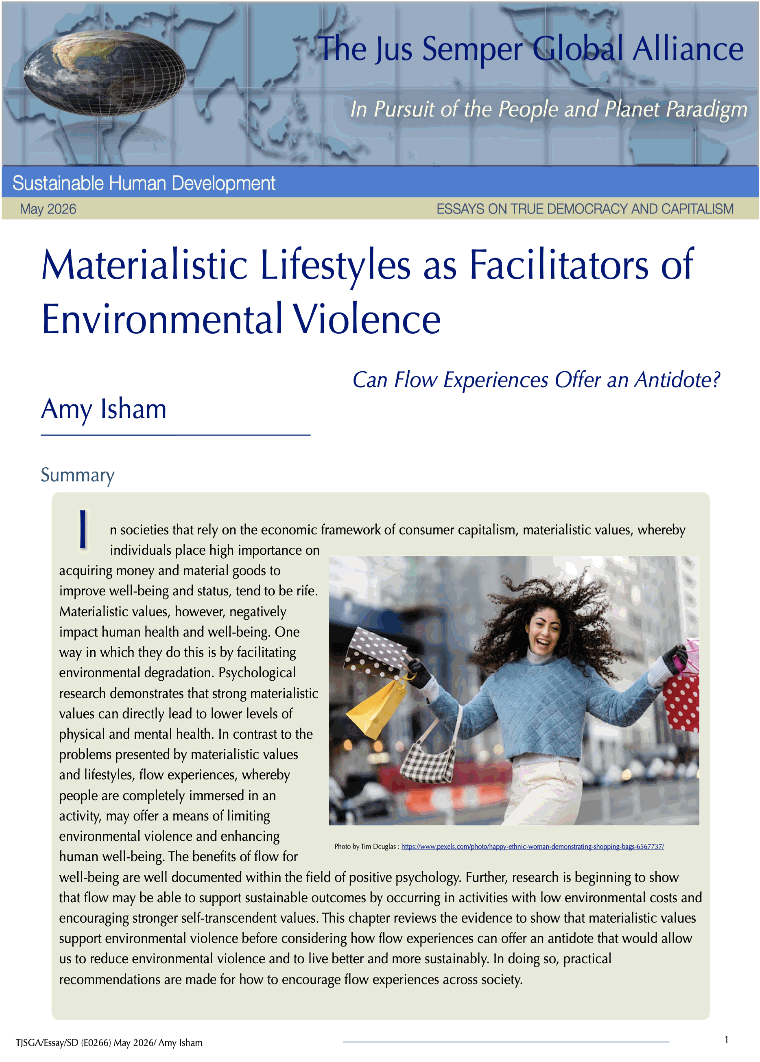
In societies that rely on the economic framework of consumer capitalism, materialistic values, whereby individuals place high importance on acquiring money and material goods to improve well-being and status, tend to be rife. Materialistic values, however, negatively impact human health and well-being. One way in which they do this is by facilitating environmental degradation. Psychological research demonstrates that strong materialistic values can directly lead to lower levels of physical and mental health. In contrast to the problems presented by materialistic values and lifestyles, flow experiences, whereby people are completely immersed in an activity, may offer a means of limiting environmental violence and enhancing human well-being. The benefits of flow for well-being are well documented within the field of positive psychology. Further, research is beginning to show that flow may be able to support sustainable outcomes by occurring in activities with low environmental costs and encouraging stronger self-transcendent values. This chapter reviews the evidence to show that materialistic values support environmental violence before considering how flow experiences can offer an antidote that would allow us to reduce environmental violence and to live better and more sustainably. In doing so, practical recommendations are made for how to encourage flow experiences across society.
For a full read of this brief, click here or on the picture to download the pdf file. |