I believe that it is not given to us to speak in terms of future centuries…we have no time to waste; the challenge is to save the conditions of life on this planet, to save the human species, to change the course of history, to change the world. —Hugo Chávez
John Bellamy Foster All of this signifies that the current mode of production is approaching the absolute limits of its mode of social metabolic reproduction, evident not simply in its growing economic contradictions—since production, consumption, and circulation define its internal structure—but also in every aspect of material reality. A structural crisis comes into play when not simply the “immediate limits” of the system but also its “ultimate limits” are in question, since this affects “the totality of a social complex.” This is particularly evident in the environmental realm, which capital, in its pursuit of endless accumulation, treats as consisting of mere barriers that need to be overcome or dumping grounds for its waste, rather than adhering to planetary boundaries and natural laws.
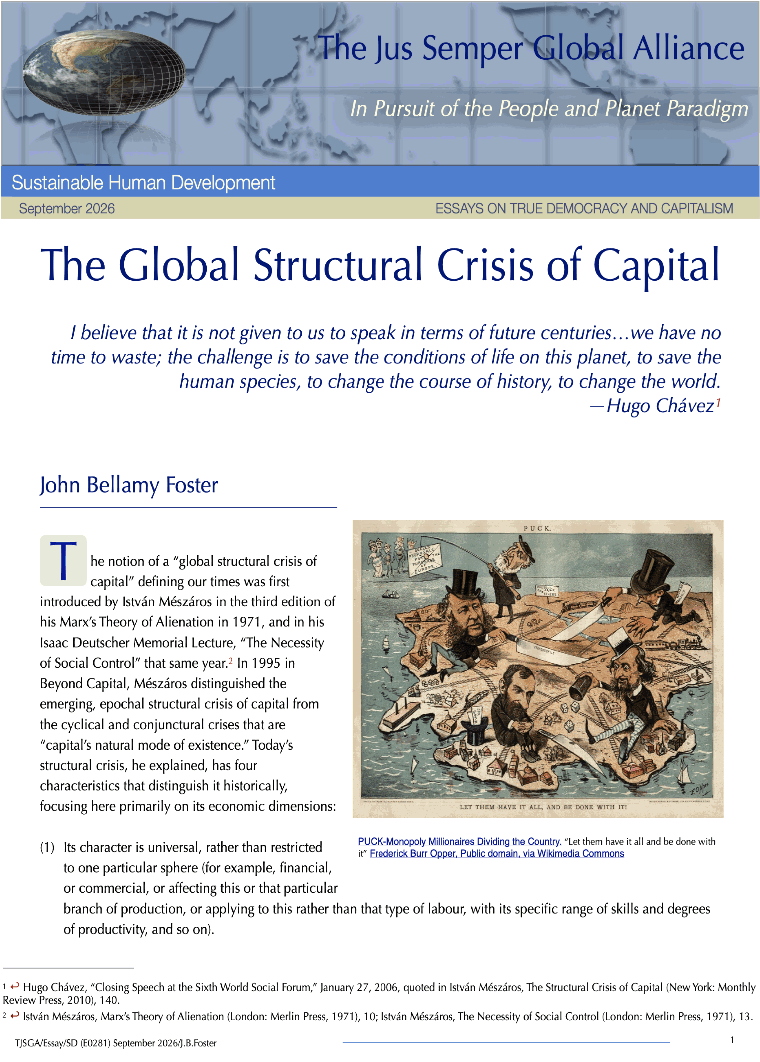
For a full read of this essay, click here or on the picture to download the pdf file.
|



- © The Jus Semper Global Alliance
| Home |  | Resources | | Economic Data | | The Global Structural Crisis of Capital |


